


Why your great team members keep leaving
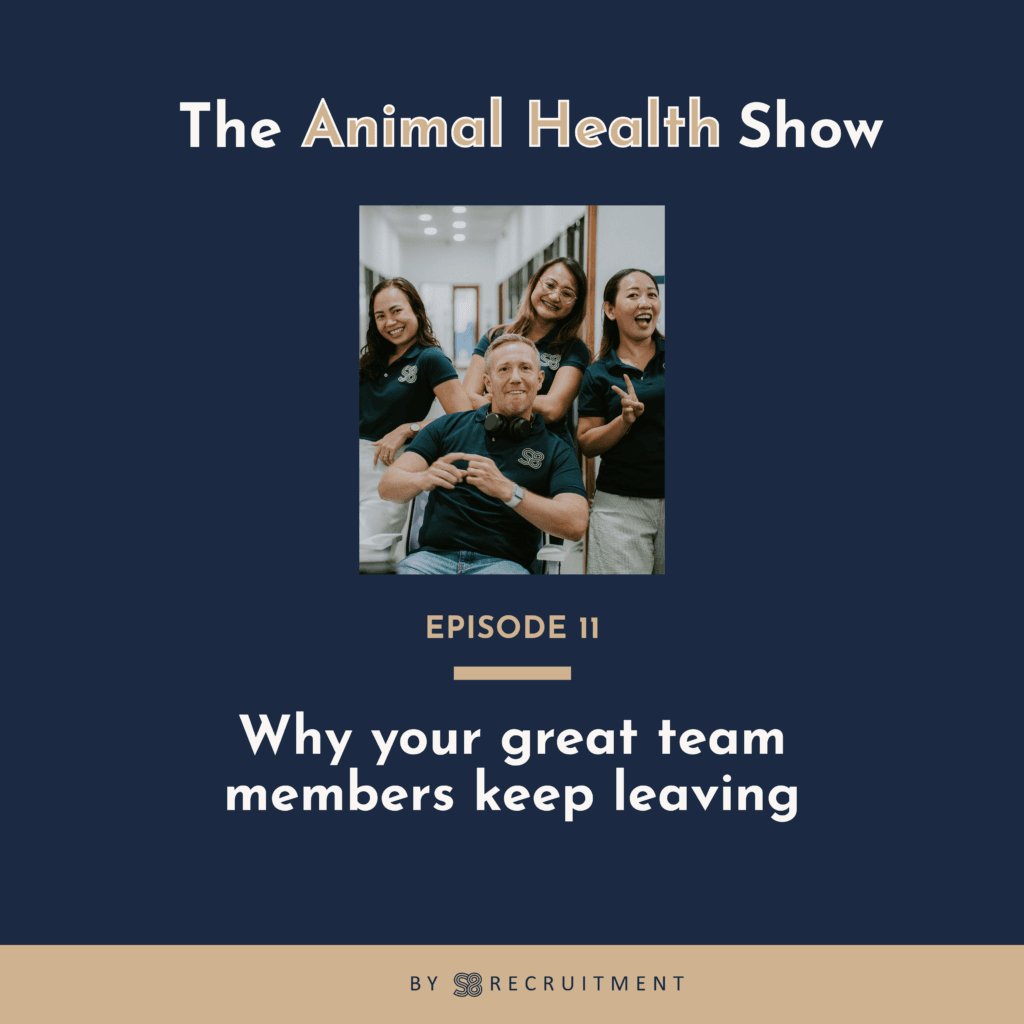
Why do great employees really leave and is it actually about the money?
In this episode of The Animal Health Show by S8 Recruitment, Shannon Wood reveals why people leave, what keeps them, and how better leadership creates stronger teams.
SHOW NOTES
TRANSCRIPT
* Transcript created by AI – may contain errors or omissions from original podcast audio
If you’ve ever found yourself wondering, Why can’t we seem to keep good people?” Then today’s episode is for you. Building a high-performing team isn’t easy. Finding great people is hard enough, but keeping them is an entirely different challenge. As recruiters, we spend every day talking to candidates about why they’ve decided to leave their current employer.
And after thousands of conversations, we’ve noticed some very clear patterns. The interesting thing is that it’s often not what you employers think. In today’s episode, I’m gonna be sharing the biggest reasons people really leave organizations, what separates businesses with exceptional retention from those constantly replacing staff, and most importantly, what you can do as a leader to build a workplace that great people genuinely don’t wanna leave.
Let’s jump in.
Welcome to The Animal Health Show by S8. I’m your host, Shannon Wood, and this is where we talk about the latest trends shaping the animal health industry. We’ll be sitting down with leading voices from across the sector, sharing practical insights to help you grow your animal health business, build a stronger team, or land your dream role.
If you’re looking for your next dream job or you’re ready to hire your next standout team member, reach out to us at S8 Expert Recruitment Solutions. You’ll find our contact details in the show notes for today’s episode. All right, let’s talk animal health
Welcome back to The Animal Health Show. Today, we’re talking about something that every leader has experienced at some point, and that team members leaving. Building a high-performing team is hard. Now, the first step is obviously finding the right people, finding that needle in a haystack, running a really intentional recruitment process, and bring the best people into your business.
Of course, that’s exactly what we do here at S8 Recruitment every single day. But once you’ve found great people, the job isn’t done. In many ways, it’s only just beginning, because keeping talented people is just as important as hiring them in the first place. How do you retain great people? How do you build an environment where they actually wanna stay?
Now, one of the biggest assumptions people make is that employees leave because of money. And look, yes, salary is absolutely matters. You need to pay people well. You need to make sure your salaries are competitive within the market. And it’s important to review remuneration over time so that good people feel valued.
But from my 20-plus years experience as a recruiter, salary is very, and very rarely, the whole story. One of the biggest reasons I hear over and over again is leadership. People leave managers. People leave poor leadership, and they leave because they don’t feel valued.
They leave because they don’t receive recognition for their work they’re doing. They leave because they don’t have clear direction. They leave because the goalposts keep shifting, and they’re never quite sure what success actually looks like. Think about it for a moment. If you’re working incredibly hard every single day, but nobody acknowledged your contribution, nobody gave you, I don’t know, feedback, nobody gave you clarity, explained what was expected of you, eventually you become exhausting.
One thing I think leaders often underestimate is just how powerful recognition really is. Even your most senior leaders want to hear, “You’re doing a great job.” People don’t suddenly stop needing encouragement because they become experienced. In fact, sometimes senior people receive the least feedback because leaders assume they don’t need it.
Recognition doesn’t have to be expensive. It doesn’t have to be, I don’t know, formal. Sometimes it’s simply taking the time to acknowledge someone’s contribution and letting them know what they’re doing matters. Another huge reason people leave is workplace politics.
Culture can deteriorate surprisingly quickly if leaders don’t actively manage it. Gossip, cliques, negativity, conflict that’s allowed to simmer, or an environment where people feel uncomfortable speaking up, these things slowly erode trust. I’ve heard people say that culture spreads like cancer throughout an organization, and I think there’s a lot of truth in that.
One negative behavior becomes two, then four, and then suddenly you’ve created an environment that nobody actually enjoys coming to each day. The same goes for expectations around workload. Look, if there’s a culture where everyone’s expected to work excessive hours, where burnout is worn as a badge of honor, or where people never feel like they can switch off, eventually the best people will start looking elsewhere.
As leaders, it’s our responsibility to own the culture we’re creating. We can’t blame them if we’ve allowed these behaviors to become, I don’t know, normal. So you need to squash poor behaviors immediately. Call it out. Have the uncomfortable conversations. Something else that often gets overlooked is giving people clarity.
People want to know what’s expected of them. They wanna know how success is measured. They want to know what winning actually looks like. When goals are constantly changing, priorities shift every week, or expectations aren’t communicated clearly, people become frustrated because they never feel like they’re succeeding, no matter how hard they work.
Clarity creates confidence. Ambiguity creates anxiety. The other thing I’d encourage leaders to do is remember that it isn’t about retention. It’s also about attraction. As recruiters, one thing we know for certain is that reputation spreads. People talk. Candidates talk to each other. Industry networks and other much smaller than people realize because businesses get a reputation.
One of the first questions candidates ask isn’t usually about salary. It’s, “What’s this company like to work for?” They’re interested in leadership. They’re interested in culture. They wanna know what people enjoy about being here. Your employer brand is being built every single day by the experience your existing employees are having. If your team genuinely enjoys working with you, they become your biggest advocates. They’ll recommend your business to others, they’ll refer talented people to your organization, and they’ll help build the reputation that attracts even more great candidates.
So yes, salary matters, benefits matter, flexibility matters, but if you really wanna build and keep a high-performing team, focus just as much on your leadership, your culture, your communication, and make sure your people feel valued every single day. Because ultimately, people don’t stay because of what they’re paid, they stay because of how they are led.
Thanks so much for tuning in to today’s episode of “The Animal Health Show.” I look forward to chatting with you guys next week.
Thanks so much for tuning in to today’s episode of The Animal Health Show by S8. If you found the value in this conversation, please share it with your colleague, an industry mate, or on social media so we can keep the discussions moving across the sector. If you’d like to get in touch, all of our details are in the show notes for today’s episode.
I thank you for listening, and I look forward to chatting with you again in the fortnight
* Transcript created by AI – may contain errors or omissions from original podcast audio