


The growing demand for natural products in pet nutrition
Can sustainability reshape pet nutrition?
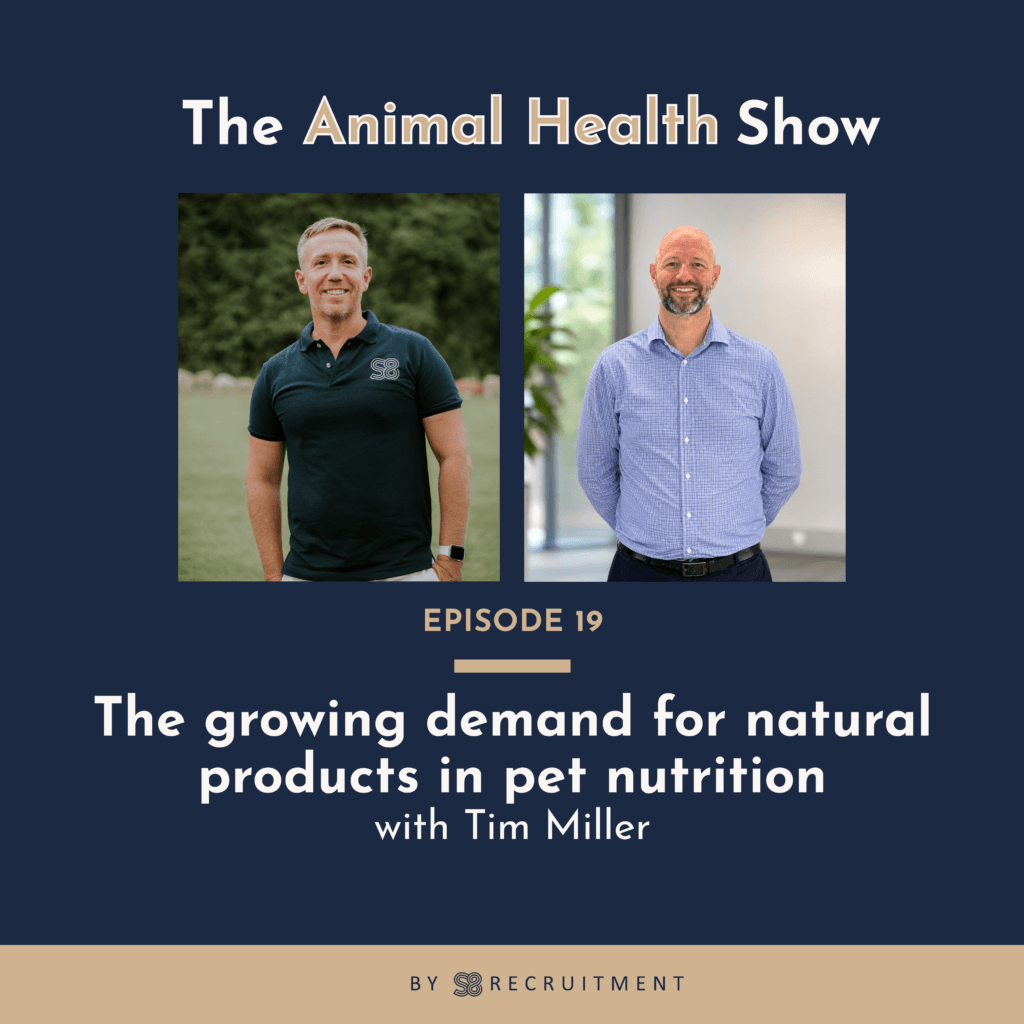
Shannon Wood chats with Tim Miller from SunPork about PorkCo, sustainable pork utilisation, pet nutrition, and the future of Australian-made pet treats.
SHOW NOTES
TRANSCRIPT
* Transcript created by AI – may contain errors or omissions from original podcast audio
Today, we’re looking at the intersection of a massive agricultural production and booming pet nutrition market, and how one company is using the bridge to drive genuine sustainability. My guest is Tim Miller, head of tertiary sales at SunPork. SunPork is the largest producer of pork in Australia.
But today, we aren’t talking about human food supply chain, we’re talking about the innovation leap into pet sector with a brand called Porkco. Tim is here to unpack the reality of the whole animal utilization, the nutritional power of pork for pets, and how SunPork is setting the standard for sustainability in agribusiness.
Welcome to The Animal Health Show by Essate. I’m your host, Shannon Wood, and this is where we talk about the latest trends shaping the animal health industry. We’ll be sitting down with leading voices from across the sector, sharing practical insights to help you grow your animal health business, build a stronger team, or land your dream role.
If you’re looking for your next dream job or you’re ready to hire your next standout team member, reach out to us at S8 Expert Recruitment Solutions. You’ll find our contact details in the show notes for today’s episode. All right, let’s talk animal health
Tim, welcome to the show.
All right. I’ll rip into it, so I know you don’t have all day, but I appreciate you coming on. Yeah, I think there’s
You’ve got a good story to tell that I’ve heard, and I think it’d be nice to see if we can share a little bit more of that, Yeah … throughout. But I wanted to, start off, I’m … I was just trying to think before we jumped on here, when we first met I think there was a role that you had that sort of we semi worked on, and then I wasn’t fortunate enough to find the right person.
You found a unicorn who’s worked out absolutely amazing for you. Yeah, Asher, who joined us. It would’ve been around Feb, March that she started. Is it? So she’s, yeah, she’s- Yeah
Been on board for six or seven months, yeah. Yeah, ’cause the segue for me is that When we first connected it was like, oh, who’s Tim Miller and oh, he’s, working in this new space. And then like who is he?
And then getting into finding out a bit more about your background. And I think we put that, when we connected and saw you worked for Kent as well. … and then but previous to that you were also working again with SunPork and, I guess in my industry we call that sort of a bit of a boomerang hire and people- Yeah
really only ever go back to a business or culture that are genuinely top tier and- It got me thinking of it, what was it about Sun Pork that made it such an easy return and how did that detour when you worked at Kent sort of reshape what you’re doing now? Yeah. Yeah, look you did certainly for me yeah, I’ve always found that working in working in cultures that really are able to bring out the best in me is, I really gravitate to, those sort of strong cultures.
And yeah, during my first stint at SunPork, absolutely loved it. Really only- Yeah … Left on the basis of, the role that I was going to was again a, a bit of a special role that was a little, too good to refuse.
But look, I think, the culture at SunPork is really unique. We’re now, we’re a huge business and a huge player in the Australian food market, but being 100% Australian farming family-owned, you know- … I think our culture and our roots are that very pragmatic, very authentic, very grounded culture coming from, that agricultural- Yeah
basis. And, I think there’s something just really special about the culture here around those elements and the way they play out. We’ve just got a very honest, very pragmatic culture. It’s just a kind of roll up your sleeves, get it done. A great culture around teamwork and people really mucking in to, to get the job done and, balanced with…
I think we’ve got the right balance also of a bit of a we know how to have fun when that time is right. So I think all of those elements for me, that culture was definitely the thing that, that brought me back. But linked- Yeah … obviously to that really unique proposition around the role and what the business was looking to do was pretty special as well.
Yeah, nice. And for those I guess outside that agribusiness, it’s a bit hard to explain that, isn’t it? Kinda I work with a lot of businesses and I feel there’s a very professional, but also a bit more laid back and more genuineness about sort of those companies and that sort of ag business and I, yeah I guess it stems from, farmers’ backgrounds and they bring that into even some big corporate cultures as well.
Yeah. And your, your- role. Your from an outside of, recruitment and job titles can be sound like corporate code I think sometimes. But- Yeah … head of tertiary sales for a company- Yeah … the size of SunPork’s, it does sound serious, but what does it actually mean on the ground in plain English?
Yeah … what sort of engine are you running in this multinational protein business? Yeah. Yeah, look you’re right. It’s not a, it’s not the world’s best title. Doesn’t really tell you a lot, but really the bit of the business that I look after is, stuff that falls outside of our core protein, pork for human consumption protein business.
So we’ve, we’ve got a large sales and marketing team who, their focus is on on selling pork products for human consumption to our various customer channels. Yeah. My role is looking at some of those things that fall out of that, core human consumption space.
One of the key projects, and definitely the biggest project, has been the one around Pawk Pet Co. And the work we’re doing in that space of launching a brand into the pet treat market. Yeah. But there’s lots of other streams and projects that will follow that.
We’ve got some stuff happening around things like selling blood into various markets. For example, people who use porcine serum- Yeah … for antibiotic manufacturing, for example. So that’s a little stream that I’ve, Wow … that I work on as well. Definitely the core thing at the moment is the pet treat thing, but there’s lots of other avenues we’re looking at outside of that core human consumption pork business that sort of falls into that tertiary sales bucket.
Yeah, yep. That’s so interesting. I was gonna ask you if there was any other little things you could share with us. I’m glad you told us at least one little sneak under the sheets kinda thing of what else you’re working on. But look, obviously as, as we were mentioning, everyone knows Sun Pork for feeding families, but the pet pork co-business where did that sort of come about?
What was the, the strategic light bulb that made the board go, “Yeah, Sun Pork needs to own a pet brand”? Yeah. Look, great, yeah, great question. So going back probably now about six years ago, the board and the leadership team were going through the next round of strategic planning for the business, the next sort of horizon.
And one of the key initiatives that came out of that was the broader bucket of sustainability. Yeah. And in our business what we talk about is the fifth quarter, so everything that as I said, that sort of falls out of our core protein production. So in, in looking at that fifth quarter one of the things that was identified was we, we know, we were already selling some product into the pet market, either directly to some manufacturers or into the trading market who were then on-selling.
So we knew there was some demand in that space. And the natural extension was we- we’ve got access to this enormous supply chain, being the- Yeah … the largest vertically integrated pork producer in Australia. Does it make sense for us to look at that and taking that in-house and rather than just being a supplier of some products could we do a better job in the market and unlock further profitability by doing it ourselves?
So that’s really where- Awesome … Where it came from was- Yeah … was out of that strategic planning process and definitely through that lens of sustainability. Yeah, sustainability, I love that that… I know if it’s not a buzzword, but it’s kinda something that’s pretty important, even from a recruitment perspective.
The younger generation all are looking at companies and sort of multinational companies about what they’re doing does that align with their values in terms of do, can they see themselves working for a business like that. Not… I’m sure the guys in the board weren’t sitting around thinking, “Yeah, this is a, a recruitment strategy by any means.”
But from my lens as a recruiter it definitely I think helps leaning into that side. But from a pet food market that’s incredibly crowded right now and from a, a branding and commercial perspective- How are you positioning Pawk to cut through that noise or what’s the core message you want pet owners to understand?
Yeah. Great question. And you’re 100% right. Obviously in that pet market, we are up against some enormous multinational competitors that, you know, people would know about who play in the pet space but look, I think one of the things when we went through the project about looking at launching into pet, what we really believed in that was that we had a really unique proposition to take- to market. One that, we thought that that customers would buy into, and certainly then ultimately that consumers would buy into. And really for us, our big differentiator I guess is being, 100% Australian. And one of the unfortunate things in the pet market as, as many people would know is, there, there are unfortunately quite a few misleading claims, that get made in the market, or the way that brands communicate maybe isn’t always that transparent to consumers.
There’s lots of imported product that is in, in products that are sold in, in, in Australia. There’s lots of instances of products that are manufactured in Australia but are overseas-owned and ultimately, those- … those profits go overseas. So our proposition is about being, 100% Australian and we can, hand on heart say we’re a, we’re a 100% Australian farming-owned business- Yeah
With all Australian pork that we manufacture in our own facility. So that, that really unique supply chain of paddock to pack- Yeah … being all Australian and being all natural is actually quite, it’s very unique in, in the Australian market. So that’s, that’s a key part of our proposition.
We certainly do find as well that sustainability type message, that again, that nose to tail ethos- Yeah … of looking to utilize parts of the pig that, that are underutilized, that aren’t necessarily useful for human consumption, but are highly nutritious and highly usable for the pet pet food and treat market is another part of the story that really resonates.
But yeah that’s our, our real point of difference is that, that paddock to pack 100% Australian positioning. Yeah, I love that. Is there anything else that you mentioned before about … I wanna, not here to rubbish competitors pers- per se, but I mean in terms of s- is there some myths that need to be debunked here about what, what us consumers are looking at that might not understand, or where some of that sneakiness of, where we’re getting misled slightly?
Yeah. Look, there’s, yeah there, there’s a number of different examples and like I said, I think one of the common ones is the sort of made in Australia but, unfortunately from, imported ingredients. One of the, one of the big ones that we talk to consumers about is something like pig ears.
Pig ears are- Yeah … one of the highest volume treat products- sold in the marketplace. And unfortunately, there’s the, the bulk of those ears are imported into Australia. And from, for a lot of those products, they come from markets that then require them to be gamma irradiated in order to meet our biosecurity laws into Australia.
And none of that has to be labeled on the product. The only call-out that’s required is on the label, f- for example, you’ll see, “Must not be fed to cats,” will be, will appear on the label. Which is not particularly useful to somebody who’s feeding a pig ear to their dog. Yeah.
Yeah. But that labeling requirement is yeah, is because the product has been imported and has been gamma irradiated in order to meet our biosecurity laws. Yeah, that’s a story that we tell people. You’ve got a, you’ve probably got part of the market and the cohort who do know that.
Yeah. There’s a large group of people who have no idea that, yeah the pig’s ears that they’re f- they’re feeding their dog as a treat, has spent months on a shipping container getting here, has been gamma irradiated and then appears on, on shelf sometimes with packaging elements that, that sort of make it look Australian.
Yeah, the, the, un- unfortunately, yeah, there are, a, a few of those products on shelf that are maybe not fully transparent to consumers about, where they’ve come from, where the ingredients have come from, and even sometimes where the ownership of the, the business really sits and where those profits are going.
Yeah. Okay. And when we walk down a, a pet food aisle and we see, I don’t know, chicken, beef, salmon, I reckon pork’s probably one of those underutilized or maybe misunderstood in the commercial pet diets from a clinical and nutrition standpoint. Why does, why is pork such a powerhouse protein for dogs and, cats as well?
Yeah. No, again, look great question. And the, I guess the p- probably the background to that is that, beef and chicken have always been the dominant proteins in Australia. Yeah. They’ve always been the proteins that have had excess raw material available to put into, to, to pet.
Historically, pork was a, a smaller protein source going back, 20, 30 years. Much more prevalent now. And that’s why you’re starting to see a little bit more pork now in, in the market. But pork itself, is a fantastic protein. It’s a complete protein. It’s highly comparable to things like beef and chicken.
It’s a complete protein. It’s highly digestible. One of the benefits that, that pork has is its high level of B vitamins, and particularly B1, thiamin. Okay. Which is a really important vitamin and necessary vitamin for for dogs’ diets, particularly around things like energy and metabolism and nervous system function.
And pork has high levels of B vitamins. One of the, the other great things about pork is because it has been underutilized it can play a really important role as a novel protein. For a lot of people, they might have dogs who do display allergies to things- Yeah … like beef and chicken.
So because pork hasn’t been that prevalent in the market pork can also be a great novel protein for for dogs who might be suffering from things like allergies. Yeah … there’s plenty of benefits in in pork for sure Yeah, I know it, it sounds funny when you say, oh, a dog can be allergic to beef, and people might scratch their head.
But my, my- I had a little Staffy, and he was a classic. He’d eat beef and he’d get blow up and get little bumps all over. And it was process of elimination. So- Yeah. Well- … 100% right in, in- Yeah, it’s amazing it’s amazing how prevalent it is, and that’s why we’re seeing more and more of those novel style proteins.
Yeah, we’re seeing the growth of something like kangaroo over the last few years. Yeah. You’re now starting to see more more fish-based proteins, things like turkey, duck. So all of those novel proteins are becoming much more common in the marketplace because of some of those issues. And are there any other myths or stigmas about feeding pork to pets that you and, the Pawk Co team are actively having to bust myths in the market about or- Yeah.
Yeah, look there, there are. And I think again, going back to my earlier comment about pork being underutilized and still being somewhat of a novel protein, I think a lot of consumers look at pork through a human consumption lens, and when they think about pork, they go straight to bacon- Yeah
Ham. Yeah. A nice roast with a, a nice crackle around it. So one of the things that people think about automatically when they think about pork sometimes is, oh, is pork a bit too fatty for for a dog because of, seeing it through that lens of human consumption.
So look, yeah, that, that is one that we know that we need to continue to message to consumers is about all of the great nutritional qualities of pork and to break through that lens of human consumption. And yeah, look, we’re not yeah, we’re not trying to sell bacon and ham to people to, to feed to their dogs.
Yeah. But that, yeah, that is one of those sort of myths or as I say, yeah, that that, that lens that we need to break through to yeah, to get people thinking about the benefits of pork. Yeah. That’s interesting. I didn’t even think of that ’cause, Yeah there has been ads even for, human side where, pork is leaner in some cuts anyway than other proteins- Yeah
That’s out there. I, I didn’t realize that there was that same, stigma until you just said that then- Yeah … about feeding it to pets as well. Yeah. But wow. Yeah. And so if you look into a crystal ball, where do you see the sustainable pet food market heading? Are we gonna see more massive ag producers following SunPork’s lead and launching their own pet brands, do you think?
Yeah, look great question. I don’t know that would necessarily be the right path forward for other other producers. Yeah. Like I said, from our perspective, it really yeah, it really made sense through that strategic path around sustainability. I think- when you look at all of the, all of the trends continue to point towards, it’s almost like the pet market starts to mirror the, the human market in a way where a lot- Yeah
of the concerns that people have about their own nutrition are now playing out in pets around wanting healthy, natural, non-processed, no preservatives, all natural- Yeah … all of those sort of themes are playing out. I think the market for novel proteins, the market for single source proteins really does feel like it’s the path forward in the in the medium term.
So I think from that perspective, that will continue to, I think we’ll continue to see that play out because that’s, that’s how people, I think, are really thinking about pet nutrition now is just so similar to how they think about how they feed their family. The, the- Yeah
the dog is now just an extension of the family. And I think the other thing that we’re seeing is the increased focus on longevity for pets as well, and people becoming increasingly aware around how do I, how do I set my pet up to have a long and healthy life- Yeah … as part of the family?
So I think that sort of focus, and the focus on, like I said, natural products, single source proteins I think that, that trend is not going away. Yeah. It’s that humanization, isn’t it, of- For sure … pets or, I don’t know if they’re called fur babies, or my four-legged baby.
Yep Like these kind of, these days. Absolutely. Absolutely, yeah. The one of the things that we notice a lot at the the consumer trade shows we go to is the number of brands now selling prams for pets. Yeah. So you talk about humanization that’s that’s definitely a, a key trend is wheeling your dog or your cat around the streets in the pram.
Yeah. I’ve seen a few few cats in there or some big Maine Coon cats in there as well- Yeah. … ’cause- Yep … that’s it’s bonkers. Yeah. And I just I’m loving that, like there is big corporates like Sample really leaning into that that real sustainability piece and, whether it’s covering their factories with solar panels and, Yep
you know just doing all those things that, that they can do to, I suppose reduce. And I love the fact that you guys are- That I’ll, very patriotic Australian sitting here thinking, proud that there’s a, a business like this doing what you’re doing. And for, pet owners to s- get in there and try it if they see it, start trying it with their pets and help promote, bring that brand along and ’cause the products by the sounds of it will be obviously from paddock from paddock to plate or pack as you call it for, Yeah
for pet. And the the, the process is all done just locally up in Toowoomba or something from memory that you mentioned. Yeah. Which is pretty novel the way you guys are doing it- Yeah … in some respects. Yeah. Is there anything you can lean in that way or just a little snippet of the, the differences or is it all hush under- undercover?
No, look, our process again with we’ve tried to keep it as simple and as natural as possible. Everything we make is just simply air-dried. Yeah. With, with nothing added to the product at all. Probably the point of difference for us is yeah, we were– when we were, again, when we were setting up the business and and looking at what our path to market and particularly our manufacturing plan would be, we- We did have a look initially at, at around, would we do some third-party manufacturing and find somebody else to make the product for us.
And in that process we probably came to the conclusion that we were probably best placed to look at doing it ourselves, you know- … given that we’ve, we’ve already got a lot of expertise in, we have value-add manufacturing plants for our human consumption part of the business.
Yeah. So when we started looking at, okay what would that, that manufacturing look like we ended up in a conversation with another Australian owned business- Yep … Who were manufacturing jerky for human consumption. Yeah. Ended up having a chat with them around, their plans and their vision to expand what we wanted to do.
They had a whole lot of inherent technology that they had developed a- across their 20-year journey- Awesome … Which we thought looked looked pretty pretty good from our perspective for getting into pet. And so the facility that we’ve ended up manufacturing from in Toowoomba, which is a brand-new facility that’s been built it’s a human grade export accredited facility, and we’ve partnered with with that business- Yeah
The Mighty Good Food Group. Some people might know the Jim’s Jerky brand well known in definitely in, in Queensland. Yeah. So we’ve partnered with with that business and using their expertise from a dehydrating perspective our expertise from, a, a manufacturing quality and scale perspective.
Yeah … and and yeah, that’s our manufacturing is now done from from a facility that we’ve named 5Q, which links back to our fifth quarter- yeah … Sustainability- platform. Yeah, that’s where we now, yeah, we now manufacture from that, that jointly jointly owned facility. Export ready.
I know when I was doing a small bit of recruitment way back, and some of the people I spoke to were just like, “Wow, this stuff will sell so well internationally.” has that even started or is it still just real Australia focus at the moment? Yeah, no. Grea- great question. So certainly initially the focus has been just in, in bedding down the launch in the Australian market.
Yeah. But look, we’ve been really pleased. We’ve we actually had a a Hong Kong-based retailer who actually found us. Yeah. And they reached out to us directly with a lot of interest around the brand and what we’re doing. And we’ve dipped our toe in the water and we’ve actually now sent a couple of orders across to to Hong Kong.
Congrats. We’ve had some initial conversations with some South Korean distributors a- as well. So- Yeah … at the moment that’s all been very light touch. It’s not something that we’ve driven. Yeah … th- these contact points have come to us organically, which is really pleasing to, to see that there’s that level of interest without us actually chasing it.
Yeah. So definitely our future, yeah, 100% we, we do think there’s a, an export market for for what we’re doing. I think overall, Australian agricultural products are still viewed really positively. Yeah … because about, the quality of food that we produce here.
And again, that, that brand message about who we are, what we’re doing, why we’re doing it, being 100% Australian, having that paddock-to-pack supply chain quality credentials seems to be really resonating. … it’s definitely on our agenda, and probably in the next over the next 12 months we’ll start to, to flesh that out and probably get more, more active in that space.
Love it. I love, love hearing all this good stuff with Australian businesses, and well done to you and your teams for getting it to where it is. One final question for you. From where I sit as a recruiter, I always love to talk about a bit of recruitment in here if I can. Yeah. I see the skills required in animal health changing rapidly, but when a, a traditional agri business like SunPork expands into retail pet branding and sustainability, what sort of talent mindset do you think you’ll be looking to bring into your teams to drive that growth?
Yeah. Yeah, look, I think from our perspective, yeah, it’s a slightly different skill set probably to what our traditional sort of sales teams have had. If I think about the, the sales team in our human consumption part of the business quite often they’ve been people who’ve got some trade experience.
They might be people who, for example, have come through butchery or from a processing background, and then who have navigated their way into things like sales roles. Yeah. And having that kind of bit of industry knowledge has b- has been quite important. I guess for us from a Pork Pet Co perspective within the, the SunPork system those more traditional FMCG backgrounds and skills are probably what’s more im- important to us.
So people who have a background in dealing with the major retailers- Yeah … who have good understanding of the the, the commercial requirements of those roles. But, things like category management and business planning. Those sorts of skills which are not necessarily found in the sort of the, the human consumption part of the business.
Yeah they’re definitely the sort of skills that we’ll be looking to bring into the business as we as we grow. Amazing. Amazing. That’s it. I, look, really appreciate you coming on to The Animal Health Show and telling us the story about, Tim and Pawk Co and SunPork.
It’s a really nice… I love the story that you’ve got to share with everyone. So again, thanks very much for coming on. Yeah, no, look, really appreciate it. Always great to be able to talk a bit about what we’re doing here. So yeah, really appreciate the opportunity. Amazing.
Thanks so much for tuning in to today’s episode of The Animal Health Show by S8. If you found the value in this conversation, please share it with your colleague, an industry mate, or on social media so we can keep the discussions moving across the sector. If you’d like to get in touch, all of our details are in the show notes for today’s episode.
I thank you for listening, and I look forward to chatting with you again in the fortnight
* Transcript created by AI – may contain errors or omissions from original podcast audio