This content is password-protected. To view it, please enter the password below.

In today’s hyper-connected world, the boundaries between work and personal life have become increasingly blurred. As technology allows us to be constantly available, we find ourselves answering emails late into the night or attending virtual meetings during what should be our downtime. In response to this growing concern, Australia has introduced “Right to Disconnect” laws, following in the footsteps of other countries like France and Spain. But what does this law entail, and how will it affect both employees and employers?

The Right to Disconnect is essentially a worker’s legal right to ignore work-related communications outside of their agreed working hours, except in emergency situations. The law is designed to protect employees from being overworked and to ensure that they can maintain a healthy work-life balance. In practice, this means that employees are not obligated to respond to emails, phone calls, or other work-related communications after their working day has ended.

While this law is a response to the increasingly invasive nature of work, especially in the era of remote working, it also raises a number of questions. Will it genuinely benefit workers? Will it hurt business productivity? Let’s explore the pros and cons of this new legislation.

The Pros for Employees

1. Work-Life Balance

The most obvious advantage of the Right to Disconnect is the promotion of a better work-life balance. In many industries, particularly in roles where employees are required to be online or available for long hours, the line between personal and professional time can be difficult to define. This law helps reset that boundary, ensuring that employees can mentally switch off from work and recharge.

In the absence of these boundaries, burnout is a serious concern. Many workers have reported increased stress and anxiety as they feel the need to be constantly available. By legally enforcing a separation between work and personal time, employees can focus on self-care, family, hobbies, or simply rest. The mental and physical health benefits are undeniable.

2. Increased Job Satisfaction

When employees are allowed to disconnect after working hours, they tend to be happier and more satisfied with their jobs. Without the pressure of answering work-related communications during personal time, they can engage more fully in life outside of work. Over time, this leads to higher job satisfaction, greater loyalty to the company, and even increased motivation during working hours.

3. Boosted Productivity During Work Hours

Some studies have shown that when workers are given the freedom to truly disconnect, they come back to work feeling more refreshed and focused. When workers know they won’t be disturbed after hours, they are more likely to give their full effort during the workday. The ability to recharge properly can prevent employee burnout and reduce the likelihood of errors or decreased efficiency due to fatigue.

The Pros for Employers

1. Fewer Sick Days and Lower Employee Turnover

Employers may worry that the Right to Disconnect will negatively impact productivity. However, the opposite might be true. When employees feel overworked, they are more likely to suffer from stress-related illnesses, which can lead to more sick days. The long-term effects of burnout can also lead to high employee turnover, which is costly for companies. By giving workers the time to truly disconnect, employers may see a healthier, more engaged workforce, ultimately leading to fewer absences and lower recruitment costs.

2. Stronger Employee-Employer Relationships

Implementing the Right to Disconnect law demonstrates that employers value their workers’ well-being. In an era where employees are placing more value on work-life balance, flexible work arrangements, and mental health, companies that embrace this law can position themselves as more desirable employers. This can attract top talent and foster a stronger bond between current employees and the company.

3. Focus on Quality Over Quantity

With employees working during clearly defined hours, employers can focus on creating more efficient systems and encouraging high-quality work. Instead of relying on workers being available at all times, companies can build workflows that prioritize results over constant communication. This shift in mindset can help cultivate a culture of trust, where employees are empowered to manage their own time and deliver strong results within their scheduled hours.

The Cons for Employees

1. Potential for Missed Opportunities

While the Right to Disconnect provides crucial protection for employees’ personal time, it may also lead to the perception that those who are always available will be favored for promotions or advancement opportunities. In a competitive workplace, employees may feel pressured to “voluntarily” stay connected after hours, even if the law allows them to disconnect. This could create a divide between employees who strictly adhere to the law and those who do not.

2. Challenges for High-Demand Industries

In some industries, particularly those that are client-facing or operate across multiple time zones, the Right to Disconnect may be more difficult to enforce. For instance, employees working with international clients might feel obligated to stay available after hours, which could create confusion or frustration when trying to balance personal obligations with work expectations.

The Cons for Employers

1. Reduced Flexibility

For employers, one of the primary concerns is the potential loss of flexibility. In many companies, employees are expected to be reachable outside of standard working hours, whether it’s to handle emergencies or participate in projects with tight deadlines. This law could limit a company’s ability to respond quickly to urgent issues, potentially affecting overall performance, especially in industries where real-time communication is critical.

2. Operational Challenges for Global Teams

Companies that operate across different time zones may find it difficult to accommodate the Right to Disconnect. For businesses with international clients or teams, work often extends beyond the traditional 9-to-5. This law might require employers to rethink how they structure their teams and distribute work across global offices to ensure that employees can disconnect without jeopardizing the business.

3. Adjustment to Corporate Culture

For many businesses, particularly in fast-paced or high-pressure industries, the expectation that employees are constantly available is deeply ingrained in the company culture. The Right to Disconnect law may require a shift in mindset for both managers and workers. This could be a difficult transition for some companies, particularly if they rely on 24/7 availability as part of their service model.

My Opinion: A Positive Step, If Used Responsibly

In my view, the Right to Disconnect laws are a step in the right direction. The modern workforce is under immense pressure to be available at all times, and this law is a necessary protection for workers’ mental health and work-life balance. The benefits for both employees and employers—improved job satisfaction, reduced burnout, and healthier, more productive teams—are clear.

However, the success of these laws will depend largely on how they are implemented. If companies are transparent about their expectations and employees are respectful of the flexibility granted to them, this law can be a win-win. But if workers take advantage of the law to disengage unnecessarily or if companies pressure employees to stay connected despite the legal framework, the law could backfire.

It’s all about balance. While the Right to Disconnect is an important safeguard for employee well-being, it’s crucial for both employees and employers to approach it responsibly. Employers need to cultivate a culture of trust and focus on efficiency during working hours, while employees must resist the temptation to abuse the protections. If both sides respect the spirit of the law, it has the potential to revolutionize the way we work, making it more sustainable for everyone involved.

In conclusion, the Right to Disconnect is not just about avoiding emails after hours. It’s about fostering a healthier, more humane work culture that values balance, productivity, and respect for personal time. With the right approach, this law could be the key to a more sustainable future for the Australian workforce.

Shannon Wood, Managing Director S8 Expert Recruitment Solutions. I have over 25 years recruitment experience specialising in the animal health industry across the ANZ region. Areas of expertise include sales and marketing, technical roles (Quality Assurance, Quality Control & Regulatory Affairs) and operational & financial positions. I work extensively in the veterinary, ruminant, monogastric, aquaculture and the pet specialty industries and I look forward to the next 16 years.

Writing key selection criteria responses can be a daunting task for many job seekers, but fear not! With the right approach, you can breeze through them and showcase your skills and experience effectively.

Here are some tips to help you tackle your next set of key selection criteria with confidence:

Keep it concise

Avoid the temptation to use overly complex language or jargon just for the sake of it. Instead, aim to be clear and concise in your responses. Stick to the point and provide relevant information without unnecessary fluff. Generally, a few paragraphs for each response is sufficient.

Be specific

When addressing each criterion, use real examples from your experience to demonstrate your capabilities. The STAR method (Situation, Task, Action, Result) is a helpful framework for structuring your responses. Start by outlining the situation or context, describe the task you needed to accomplish, explain the actions you took, and finally, highlight the positive results achieved.

Highlight your relevant experience

Tailor your examples to align with the role you’re applying for. Begin each response with a broad statement that demonstrates how you meet the criterion, then provide concrete examples that illustrate your skills and achievements in that area.

Prepare in advance

Keep a running list of your accomplishments and successes in a notes file on your phone or computer. This will help you recall relevant examples when writing your responses and serve as a valuable resource for future job applications and interviews.

By following these tips and approaching key selection criteria responses with confidence, you’ll be well-equipped to showcase your suitability for the role and stand out as the best candidate.

Remember, each response is an opportunity to demonstrate your skills, experience, and potential contribution to the organisation. So, embrace the challenge and let your accomplishments shine!

Shannon Wood, Managing Director S8 Expert Recruitment Solutions. I have over 25 years recruitment experience specialising in the animal health industry across the ANZ region. Areas of expertise include sales and marketing, technical roles (Quality Assurance, Quality Control & Regulatory Affairs) and operational & financial positions. I work extensively in the veterinary, ruminant, monogastric, aquaculture and the pet specialty industries and I look forward to the next 16 years.

So, you’ve taken the leap and decided to team up with a recruiter to find your dream job.  

First off, kudos to you! You have just taken a big step towards realising your career goals.  

Now, let’s dive into what working with a recruiter actually entails. 

Let’s talk money 

Let’s address the elephant in the room right off the bat: no, you don’t pay us to find you a job! 

As a candidate, working with a recruiter doesn’t cost you a cent. We’re here to help you navigate the job market and land that perfect role. Employers pay us to find the perfect staff member, someone like you, who fits their company culture and has the skills they’re looking for. So, rest assured, our focus is solely on connecting you with the right opportunities and helping you succeed in your career journey. 

Getting to know one another 

Once you’ve expressed interest in working with us, we’ll schedule a (virtual) sit-down to really get to know you – and we mean really know you! We’ll delve into your career goals, preferred locations, past experiences, and the type of companies that pique your interest. This deep dive helps us tailor our search to find the perfect fit for you. 

Making resume magic 

Your resume is your golden ticket to the job market, and we’re here to ensure it shines. With years of experience under our belts, we’ll review your resume and provide valuable feedback. Whether trimming the excess or beefing up the content, we’ll help you present your best self on paper. 

You’re on our mind  

Once we’ve got a clear picture of your career aspirations, you’re on our radar. When a role that aligns with your dream job pops up, you’ll be the first person we reach out to. After all, we’ve already mapped out what makes you tick and which opportunities would be a perfect match for you. 

We’re your biggest fan! 

Consider us your personal cheerleaders in the job search journey. When we find a role we believe fits you perfectly, we’ll sing your praises to the hiring manager. Plus, we’ll arm you with invaluable interview tips and provide support every step of the way. 

Crossing the finishing line – together 

When you receive that coveted job offer, we’re not done yet. We’ll help you navigate through the nitty-gritty details of your contract, assist with salary negotiations, and address any lingering questions or concerns. We’re with you until your first day on the job – and beyond. 

So, sure, you could tackle the job market solo, but why go it alone when you can have us by your side?  

Our extensive experience and connections in the animal health industry don’t just increase your chances of finding your perfect job, we help save you time and worry throughout your job-seeking process. 

So, let’s team up and make your career aspirations a reality! 

Shannon Wood, Managing Director S8 Expert Recruitment Solutions. I have over 25 years recruitment experience specialising in the animal health industry across the ANZ region. Areas of expertise include sales and marketing, technical roles (Quality Assurance, Quality Control & Regulatory Affairs) and operational & financial positions. I work extensively in the veterinary, ruminant, monogastric, aquaculture and the pet specialty industries and I look forward to the next 16 years.

Welcome to the world of relationship building, where every handshake, conversation, and interaction holds the potential to shape your career (yikes!). 

Whether you’re forging connections with clients, colleagues, or industry peers, the strategies you decide to use can make all the difference.  

So, grab a seat and get comfy as we dive into five DOs when it comes to developing connections in your personal and professional life. 

DO listen with intent 

At the heart of nurturing personal connections lies the art of attentive listening. While active listening is crucial for understanding people’s needs and preferences, going a step further and truly getting to know them personally can make all the difference. Remembering the little details – like their favourite coffee order or pet’s name – demonstrates genuine interest and sets the stage for a meaningful connection. 

DO anticipate needs  

Anticipating the needs of your professional connections requires understanding their business landscape and individual preferences. Staying attuned to shifts in their personal and professional lives helps you offer support and guidance when they need it most. 

DO help cultivate a positive culture  

A supportive workplace culture enhances collaboration and camaraderie. Celebrate achievements, embrace learning opportunities, and encourage open communication among your team members. When individuals feel valued and supported, rapport flourishes naturally. 

DO forge strategic partnerships  

Seek out people whose objectives align with yours, and grow your relationships based on trust and integrity. Collaborating with like-minded individuals leads to more effective teamwork and better outcomes for everyone. 

DO embrace acts of kindness  

Kindness is a universal language. Whether it’s expressing gratitude or offering support during challenging times, small acts of kindness go a long way in strengthening relationships. By leading with empathy and compassion, you’ll create a positive impact far beyond your workplace. 

The art of relationship building is both a skill and a mindset. By honing your ability to listen, anticipate needs, cultivate a positive culture, forge strategic partnerships, and embrace acts of kindness, you can lay the groundwork for meaningful connections that propel you towards your goals. 

So, go ahead – and watch as your professional journey unfolds with trust and rapport at its core. 

Shannon Wood, Managing Director S8 Expert Recruitment Solutions. I have over 25 years recruitment experience specialising in the animal health industry across the ANZ region. Areas of expertise include sales and marketing, technical roles (Quality Assurance, Quality Control & Regulatory Affairs) and operational & financial positions. I work extensively in the veterinary, ruminant, monogastric, aquaculture and the pet specialty industries and I look forward to the next 16 years.

Have you ever heard the saying, ‘You never get a second chance to make a first impression’? I’m sure whoever wrote that must have been a recruiter – from my perspective, it’s spot on. 

Usually, if you’re a job seeker, that first impression is your resume. It’s a window into your professional life and a snapshot of your skills and experience. It’s also the window hiring managers peer through while wondering, ‘Do I want to know more about this person?’. 

So – when yours is one among a tall pile of others – it’s essential to keep your window (ahem, resume) polished. Here’s how: 

Customise, customise, customise! 

You’re steering your career here, so tailor your resume to the job you’re applying for. Focus on the details highlighting your relevant skills and experience, and less about how you were your school’s sports captain in 1998…sorry. 

Plus, provide more info about the most recent roles you’ve had. One or two lines about your early career roles (or simply titles and dates) are usually sufficient. 

Keep it short, sharp, and to the point. 

Unfortunately, no one has time to read reams of information, despite how great it sounds. Two or three pages is the perfect length. 

Use keywords. 

A few keywords from the job description scattered throughout your resume (only where it makes sense) can catch hiring managers’ attention. It shows you’re speaking their language!  

Don’t make stuff up. 

It shouldn’t need to be said, but we’ll say it anyway: don’t lie on your resume. As tempting as it may be to give yourself a promotion or roll five positions into one to sound ‘better,’ there are LOTS of reasons why this is a bad idea. It may seem like something you’ll easily get away with, but you’ll likely wind up with egg on your face and leave a stinking impression. 

Make sure it’s carefully written, proofread and formatted. 

From our experience, the quality of the resume is often a good indicator of the quality of the candidate. You’ll be more memorable if the recruiter and hiring manager can clearly understand what you have written. Take your time, format your resume so it’s easy to read, and check it thoroughly for grammatical errors or typos. 

If it’s been a while since your CV has seen some love and still includes roles from your high school days, it’s time to make a cuppa, sit down, and work on polishing it until it shines. Think of it as an investment in your future! 

Shannon Wood, Managing Director S8 Expert Recruitment Solutions. I have over 16 years recruitment experience specialising in the animal health industry across the ANZ region. Areas of expertise include sales and marketing, technical roles (Quality Assurance, Quality Control & Regulatory Affairs) and operational & financial positions. I work extensively in the veterinary, ruminant, monogastric, aquaculture and the pet specialty industries and I look forward to the next 16 years.

Being in the midst of a global pandemic has brought a whole host of challenges, of which we’re all patently aware. On the other hand, it has also brought the opportunity for some considered introspection. All this time at home, whether you’ve continued to work or you’ve had to take leave, or reduced hours, has allowed time for each of us to reflect on what’s important. 

Some people have relocated out of cities or to different states, to enjoy the marginally increased freedoms afforded by regional living. Others have enjoyed working from home (despite the juggle of childcare) and have come to appreciate the hours saved by not commuting and the flexibility of popping on a load of washing between Zoom meetings. And some have relished the extra time at home to work on projects, spend time with their family or to finally read that book!

Regardless of how that time’s been spent, priorities have shifted and some life-changing or affirming realisations have been reached. And this is no more apparent than in the workforce.

As the Northern Hemisphere has been forced to navigate the pandemic a few months ahead of us here in Australia, working in executive recruitment, I have been keenly watching the trends coming from that part of the world. And what we’re seeing gives us a fair indication that people are seriously considering what they want from their employers. In fact, in the US, the Bureau of Labor Statistics found that in August this year, a record 4.3 million workers quit their jobs. This is the biggest number they’ve recorded since tracking this data in December 2000.

If you’d like to look further afield, in April of this year, Microsoft surveyed approximately 30,000 people across 31 countries and discovered that over 40% of the global workforce was contemplating leaving their employer this year. To consider that statistic in your own workplace, you’d be facing just under half of your employees looking for work elsewhere!

Without considering this data, it would be easy to assume that, given the uncertainty in the world right now, people might be more inclined to stay where they are rather than taking steps to find a job. However, we are in a fortunate position where we can see patterns emerging from other parts of the world and prepare our own businesses for a similar experience.

Across Australia, as various states have come in and out of lockdown, we’ve heard time and again of the pressure it puts on families as they attempt to juggle childcare while also keeping up with work. And it would seem for the most part, women have been more affected than men.

In Canada, Visier has been tracking employment data since 2018 and, in June this year they reported that female resignations have increased year on year in that time. This was made even more apparent when, in 2020 there was a further spike in female resignations, indicating it was mostly women who were stepping out of the workforce and into full-time caring roles at home.

Also of note in this Visier study was that the greatest increase in resignations has come in the 40-45 year old age group. Just think what this could mean for your own business. We’re talking about mid-career professionals who would have significant experience and are most likely, in some kind of management position making them not so easy to replace.

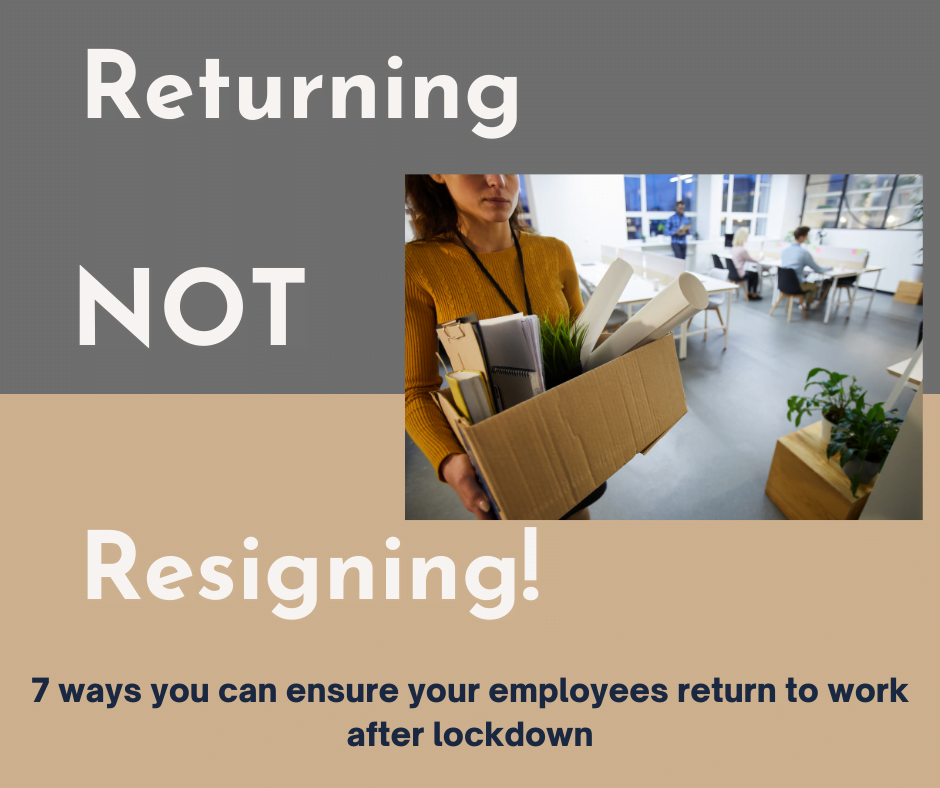
These are some incredibly telling statistics which, as employers, we would do well to pay attention to. Within the Microsoft study, they identified 7 trends which explained the motivations driving the increase in resignations. Let’s take a look at them and highlight some ways in which they can be countered to ensure your employees are returning to work, rather than resigning from it.

  1. Employees do not want to say goodbye to flexible work – now that it’s largely been proven that working from home or working around family commitments is possible, this is not something your people will want to give up. Allowing flexibility around work hours or some work from home days will certainly motivate your team’s return.
  2. Leaders are out of touch with their employees – there are many ways in which this can be turned around and the common theme within each of them is to simply listen. Whether you set up 1:1s or you send out surveys, demonstrate that you’re hearing their needs and show them by incorporating their suggestions into your business where possible.
  3. High productivity is hiding exhaustion – this is such a common theme in modern life and something which we all know needs to be rectified. To change a culture of long hours, you must start at the top. Do your best to keep to respectable work hours yourself and acknowledge people for their individual achievements, rather than unsustainable output.
  4. Gen Z at risk – it was particularly interesting to read that younger employees genuinely want to interact with older employees and relish the opportunity to learn from them. If your mid-career team members are at higher risk of resignation, find ways to motivate them and your gen z-ers by offering a mentor program and thus, an opportunity for team work.
  5. Less team interaction limits innovation – working remotely has led to the siloing of teams in a lot of workplaces. Without being able to interact with other departments in the lunchroom or by simply being in shared space, teams have started to keep to their own areas. As your people make their way back to work, look for ways to encourage that interaction and bring back innovation and motivation.
  6. Authenticity will spur productivity & well-being – when your team starts increasing their hours or returning to the office, it’s important to acknowledge what everyone has been through. Allowing space to reflect on any issues they faced during lockdown or concerns they have about being out in the world again, will inspire connection and help with overall wellbeing.
  7. Talent is everywhere – you all know how strongly I feel about this so I love when research supports what I’m saying! If you do have employees who have relocated during lockdown, have an open discussion with them about their intentions and hopefully you can collaborate to find a way to keep them in their role, from their new location. 

We are very fortunate to be in a part of the world where we’re able to gain foresight into what may happen as we return to work. With the rest of the world paving the way for us, we can learn from their experiences and transition their findings into our own workplaces. Especially with these 7 tips to support a return to work over a resignation from it.

I’d love to hear from you if you need a hand preparing your people to return or, if you’ve come up with some other ideas you’d like to share.

Shannon Wood, Managing Director S8 Expert Recruitment Solutions. I have over 16 years recruitment experience specialising in the animal health industry across the ANZ region. Areas of expertise include sales and marketing, technical roles (Quality Assurance, Quality Control & Regulatory Affairs) and operational & financial positions. I work extensively in the veterinary, ruminant, monogastric, aquaculture and the pet specialty industries and I look forward to the next 16 years.

I’m not going to go on about how we’re in unprecedented times. I’m not going to bother talking about how our current mid-pandemic situation has encouraged many of us to seriously consider what it is we want from, not just our work life, but our life, life!

Because I know you’ve heard it enough.

During this pandemic, there are many businesses which have been exposed for their rigidity and inflexibility. While sporadic lockdowns are destined to challenge even the most resilient and successful businesses, it does seem that those businesses which have been able to be flexible in their provision, to their clients and to their employees, are the ones which are best navigating this crazy time.

I’ve spoken at length about the importance of flexible workplaces and how critical it is to the happiness of your people and thus, the success of your business. And this was even before there was a virus making its way around the world! During the pandemic however, this flexibility can literally make or break your business.

Working in executive recruitment, I’m noticing the job market is so tight and, getting good people is becoming increasingly difficult. Having experienced the ability to work from home and attempt to navigate their workload around the demands of homeschooling and, the other lockdown challenges we’ve all faced. Employees are now hyper-aware of their value and, that it is possible to be productive and flexible.

Gone are the days of bumping up a salary offer by $10-$20k. In this climate, candidates know what they’re worth and they know how much of that extra money will go towards funding their commute or other unnecessary work expenses. Yes, you may be able to throw in a HUGE sign on bonus but, once you’ve got that dream candidate, how do you plan to keep them?

Candidates don’t just want to find a job, they want more. And here’s where it gets tricky.

On one side, I see amazing clients declaring how flexible they are. Then on the other, I see candidates who want flexibility. Where things get confusing is, while they’re using (essentially) the same word, the two meanings are completely different.

It could be that the client sees themselves as incredibly flexible by offering an early start or finish so that the candidate misses the traffic. While the candidate, on the other hand, doesn’t want to come into the office every day. To them, flexible hours are not particularly appealing at all.

What I’m trying to say is, to be able to truly profess your flexibility as an employee, it’s important to ensure you’re appealing to your candidate’s needs. I guess what you and your candidate really need is clarity. They need to know what you’re able to be flexible with and, you need to know what they want!

And that’s where I come in.

Over my many, many years in sales recruitment, I have carefully curated an impressive list of equally impressive candidates. And I know what they’re looking for. When a client is able to articulate the kind of person they’re looking for and what they’re able to offer them, I usually know pretty quickly exactly which candidate will best suit their needs.

One of the (many, many) benefits of working with a recruiter (like me) is, they ensure both the candidate and client have clarity about the needs of each other. The open communication provided by someone mediating the negotiations ensures neither of you misses out on an incredible opportunity!

If you’d like me to ensure your perception of flexibility aligns with that of your next top-performer, give me a shout! Whether you’ve got an animal sales job, an equine health job or a pet nutrition job, I can help you negotiate the type of flexibility which is appealing to both sides.

Shannon Wood, Managing Director S8 Expert Recruitment Solutions. I have over 14 years recruitment experience specialising in the animal health industry across the ANZ region. Areas of expertise include sales and marketing, technical roles (Quality Assurance, Quality Control & Regulatory Affairs) and operational & financial positions. I work extensively in the veterinary, ruminant, monogastric, aquaculture and the pet specialty industries and I look forward to the next 14 years.

Tip 1 – Automobile University!

The very BEST sales reps I know, don’t even know how to turn their radios on.

They are too busy listening and learning from experts on Audiobooks or podcasts.

I would set a 21 day do it to yourself program, and for the nest 21d ays only listen to sales Audiobooks.

There are many suggestions from Audible:

  • Zig Ziglar – maybe one of the very first
  • Brian Tracy – There are so many to choose from My personal favourite
  • Tom Hopkins – Loads of sales training

Why? It might be one line or one action that could increase your sales by 10, 20 or 50%

Or you could be a something personal you want to achieve/ a goal you want attain. Here is the opportunity to learn from the experts.

Tip 2 – Don’t Wing It!

Preparation is KING!!!!!

Have you ever dealt with a sales person who is trying to wing it and is totally un-prepared?

I am not sure who suffers the most? The rep totally blows that potential opportunity, even after getting the time to pitch the prospect. Or client having their time wasted?

Have you ever heard this “If I win your, business then I will bother to learn about your company/business” Um…no thanks.

Hacks (as simple as they are)

  • Look at the website
  • Read notes in CRM from previous reps
  • Google prospect for anything interesting
  • Search Linkedin – see previous companies
  • Get referrals into the business

Please do one of the these or all of the above if you are not already to set your self up. Preparation is king and will help you excel to that next level.

Tip 3 – Keep up the water & get a Keep Cup

To maintain a guilt-free coffee habit (especially in Plastic Free July), get yourself a kick-arse keep cup! Another wise investment is a reusable water bottle. Keep it filled and drink from it regularly.

It’s easy to convince yourself that drinking water means frequent bathroom stops, resulting in reduced productivity. Let me debunk that for you right now!

Dietary recommendations from the US Institute of Medicine say people should drink 2L-3L water a day!! I think it’s safe to say most people are likely mildly, to severely, dehydrated without even realising. 

Symptoms of dehydration can be minor like headaches, trouble concentrating and tiredness but, become more serious with weight gain, high blood pressure and kidney issues. Any of these can greatly impact your capacity to work, which in turn impacts your team as well.

In fact, this loss in productivity translates to $2.5 billion loss each year as a result of time off work due to chronic illness, most of which was simple dehydration.

So, if you were to compare the time it takes to stop for the bathroom with time off for any of these dehydration symptoms, I would say, take the bathroom break!

Tip 4 – How to cold call

As a salesperson, cold calling is one of those things which is fine for some while for others, it induces a feeling of dread.

In order to lift your cold calling game, I would suggest you don’t overthink it. Which is why, I’d like to break it down into these 4 hot tips for nailing those cold calls.

  • Don’t sell – the aim of that first call is should be all about building rapport with your prospect and establishing what their needs are.
  • Prepare –don’t follow a script (you can’t build rapport with one!) BUT, do plan some questions in advance so you ensure you get the information you need.
  • Focus on THEM – this is the time for you to learn about them and how you can help. They don’t need to know all your knowledge and information…yet!
  • Book in the next something – you could schedule a face-to-face or perhaps a follow-up call. Whatever it is, book it in and leave them wanting more from you.

When it comes to cold calling, if you take away the pressure of making a sale and focus more on building a new relationship, you might just rediscover the fun of reaching out to a new prospect.

Tip 5 – Building rapport

If there’s one thing you must have as a kick-arse salesperson, it’s great rapport. You could have THE BEST portfolio but, if your clients don’t like and trust you, it’ll be useless.

To build rock-solid relationships, there are simple things you can do to show your sincerity as a trusted advisor.

Listen – obviously this is relevant from a business perspective but, if you want to take it one step further (and you should) get to know them personally too. Take note of things like, how they like their coffee, what are their children’s names, when’s their birthday?

Predict – once you really understand your clients, you’ll be able to work proactively, not reactively, to ensure their needs are met. Anticipate objections and respond accordingly; know when their business is shifting and, what you can do to help this change.

Be relevant – when you have super relevant and quality clients, you’ll work together more effectively and, your figures will be better too! Choose wisely to find clients who you can genuinely help and, that rapport will come naturally.

Always remember, a little bit of kindness goes a very long way.

Tip 6 – Fill your cup

I know you’ve probably heard it A THOUSAND times but, that’s because it’s that important.

You can’t fill from an empty cup.

In fact, what are you even doing on LinkedIn on a Saturday?? No matter how busy you are, it’s imperative you take a break from your work to reinvigorate. 

Traditionally, weekends have been a time of rest however, particularly in recent times, the workweek can unknowingly bleed into the weekend. While you don’t have to plan anything elaborate, planning SOMETHING that isn’t work related will help you get motivated for another week of work.

Make time for some me time (or, you time!). Maybe you’d like to:

  • Sit in the sun;
  • Read a book (or at least a couple of pages);
  • Play (or watch) some sport;
  • Spend time with family or friends.

None of these things cost a lot – if any – money and, are all it takes to get you ready for another week. 

So, get off LinkedIn and find your happy place…away from work!

Tip 7 – Hang on, what are you still doing here??

Pretty sure we spoke about this yesterday. You’re supposed to be taking a break from all the work-related things!

Oh well, since you insist on being here, let’s talk about using Sunday to prep for the week.

There’s not much better for an awful case of Mondayitis than organising yourself before the dreaded day arrives. Some things which you might like to consider getting ready include:

  • Meals – avoid the hassle of thinking about what to eat each night by doing your planning and shopping before the week starts.
  • Clothes – attack the mountain of washing which has accumulated over the previous week to give you a fresh start.
  • Car – give the car a good clean and fill ‘er up so you’re ready to hit the road running on Monday morning.
  • Keep cups – remember we spoke about having these in your car? Ensure they’re clean and easily accessible to keep you hydrated, happy and well.
  • Take a breath – this is your one, last chance to have a moment to yourself so, do whatever it is that fills your cup.

Ok, get out of here, prep yourself for the week and I’ll see you back here tomorrow!

Tip 8 – Territory Planning

As a salesperson, managing a territory without a clear plan is kind of like driving without a map. Yeh, you’ll eventually find your way but, you’ll have wasted a lot of time and effort in the process.

In order to most effectively manage your territory, I would suggest doing the following:

  • An overall review – yes, you should be super familiar with all your clients but, no matter how well you know them, a review is always helpful.
  • Categorise – now that you’re up to date with your clients, assign them each a category. You might like to do this according to their time demands, their purchase history or their geographical location.
  • Set goals – think about how your customers are performing and look for ways to improve it. It might be as simple as scheduling an extra visit or call and, you can consider this as you plan your month.
  • Implement and evaluate – now that you have a strategy, it’s time to roll it out! Put it into action and regularly reflect on how it’s progressing.

Consider your territory plan a little like a treasure map. With time and effort, it will guide you to something pretty darn special!

Tip 9 – Keep track of important dates

Ideally as a business you’d be working out of a shared CRM however, if this isn’t the case it’s still a great idea to set reminders for important dates in your diary.

Remember back in Tip 5, we spoke about building rapport? Well, since you’ve been doing such a great job of being aware of the little things, you’ve got lots to keep track of. Rather than letting all that awesome information go to waste, remind yourself (and maybe even them!) of things like:

  • Client’s birthday or wedding anniversaries;
  • Big games for the sports team they follow;
  • An event you know they’d love to go to;
  • A holiday they have coming up.

When you have a lot of information floating around in your head which you simply MUST remember, you’re guaranteed that something will slip through. Don’t go to all the trouble of finding out crucial details from your client and then letting them go to waste. 

Set yourself reminders, either in your calendar or notes and, you’ll be recognised for the truly thoughtful person that you are!

Tip 10 – Turn off your notifications!

And there you have it, I saved my most controversial tip until last. You’re welcome.

But yes, I really mean it. Turn off your notifications!

Nothing kills productivity more than the incessant ping of that hilarious group chat responding to latest meme as it does the rounds. So, turn it off.

If you want to go one step further, you can file all your social media and other distracting apps into a folder on your phone. This will make them less visible and thus, less tempting when you really need to concentrate.

It’s not like you won’t be able to catch up on everything you’ve missed. All you’re doing is telling the phone not to interrupt you every time someone posts a laughing emoji. When you’ve completed the task you needed to, head into the app or open your emails where everything will be waiting for you. 

This simple change will make such a HUGE difference to your productivity. In fact, with all the time you’ll be saving, you might even be able to create the next viral sensation!

Shannon Wood, Managing Director S8 Expert Recruitment Solutions. I have over 14 years recruitment experience specialising in the animal health industry across the ANZ region. Areas of expertise include sales and marketing, technical roles (Quality Assurance, Quality Control & Regulatory Affairs) and operational & financial positions. I work extensively in the veterinary, ruminant, monogastric, aquaculture and the pet specialty industries and I look forward to the next 14 years.

To all those wonderful people who I’ve worked with before,

If you’ve recently lost your job, or had your hours cut as a result of COVID, please get in touch.

If there’s any way I can help you, I’d love to know. Can I write a LinkedIn recommendation for you? Is there someone I can email to put in a good word? Do you simply need someone to run their eye over your CV? Please let me know, we’re all in this together and I’d love to help where I can.

In the spirit of navigating the uncertainty brought about by COVID, I’d love to share with you some tips for job hunting during this global pandemic.

I can hear some of you asking, job hunting in a pandemic, are you MAD?! Let me start by sharing with you some of the benefits of using this time to find a new job.

You have more autonomy working from home – look, I’m not going to say you have more time now that you’re working from home while potentially juggling kids and running a house. What I will say is that you have a little more flexibility with how you use that time. Not being in an office means you won’t be heard taking a call from a potential employer and you won’t have to dash away from your desk to squeeze in an interview.

The timing is perfect for the socially awkward folks amongst us – if the thought of networking leaves you in a cold sweat, this working-from-home caper would be suiting you just fine. To find online events in your industry, have a quick search and you’ll find things scheduled which you can attend on your lounge, in your slippers.

You can cheat – ok, not exactly cheat BUT. When you’re interviewing online, you will be able to have a few notes which you’ll be able to refer to off-camera, without your interviewer knowing.

Now that you’ll agree that job hunting in a pandemic isn’t as crazy as it seems, here’s some suggestions for how you can do it, and do it well.

  1. Be Strategic – some industries have fared much better than others during this global crisis. Before you start sending out your resume to anyone and everyone, do your research. With everything that’s going on, you’re best to only contact companies that are actively advertising for roles and steer well clear of those who have been adversely affected.
  2. Be Accomplished – if you’re lucky enough to have a few extra hours available, there are a whole lot of courses available online (and potentially discounted) if you’d like to upskill. In addition to this, take some time to update your resume and LinkedIn profile to reflect your remote working experience. Employers are looking for people who can use relevant shared software like Google Docs and, they want people with soft skills such as being proactive and working autonomously.
  3. Be Patient – recruiting can be slow at the best of times however, in the midst of a global pandemic, it will be exceptionally slow. Many companies have had to transition their processes online and there may be some kinks in these new systems. It’s also likely that, if not totally frozen altogether, hiring may require a few more checks than what was previously required. For this reason, you’ll need to allow time for your potential employer to make their decisions.

Whether you’re looking for a career change or you’ve been forced to search for something new, job hunting during COVID doesn’t have to be quite as daunting as you’d think. Allow a little more time and approach your search strategically and you may surprise yourself with the results. And please, as I said earlier, if there’s anything at all I can do or advise to make this process any easier for you, just let me know.

Shannon Wood, Managing Director S8 Expert Recruitment Solutions. I have over 14 years recruitment experience specialising in the animal health industry across the ANZ region. Areas of expertise include sales and marketing, technical roles (Quality Assurance, Quality Control & Regulatory Affairs) and operational & financial positions. I work extensively in the veterinary, ruminant, monogastric, aquaculture and the pet specialty industries and I look forward to the next 14 years.