


How vet techs can help transform veterinary practice
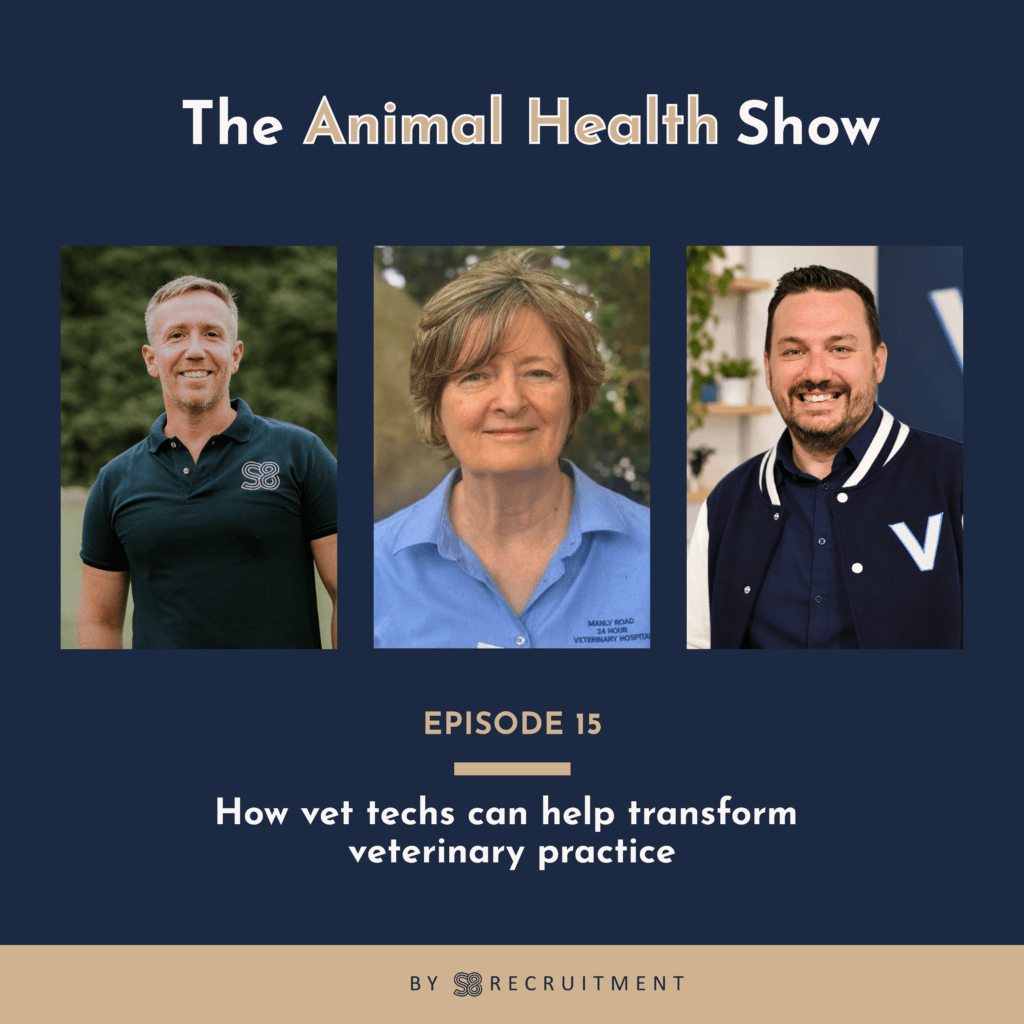
Could vet techs help solve Australia’s veterinary shortage?
Shannon Wood chats with Gary Fitzgerald and Dr Patricia Clarke about the future of vet techs in Australia, exploring career pathways, regulation, expanded scopes of practice, rural veterinary care, and how technology could reshape the industry.
SHOW NOTES
TRANSCRIPT
* Transcript created by AI – may contain errors or omissions from original podcast audio
Have you ever wondered what a vet tech actually is? In today’s episode, I’m sitting down with the former president of the VNCA, or Veterinary Nurses Council of Australia, Gary Fitzgerald, and he’s also a graduate from UQ with a veterinary tech degree, and s- also speaking with Dr. Patricia Clarke. Now, she’s spearheading the future of vet techs here in Queensland and for Australia.
We delve deep into the benefits of becoming a vet tech for vet nurses here in Australia, what that can do for a clinic and for the rural communities, why we should have vet techs here in Australia. If this sounds like you, buckle up. You’re in for an amazing podcast.
Welcome to The Animal Health Show by S8. I’m your host, Shannon Wood, and this is where we talk about the latest trends shaping the animal health industry. We’ll be sitting down with leading voices from across the sector, sharing practical insights to help you grow your animal health business, build a stronger team, or land your dream role.
If you’re looking for your next dream job, or you’re ready to hire your next standout team member, reach out to us at S8 Expert Recruitment Solutions. You’ll find our contact details in the show notes for today’s episode. All right, let’s talk animal health
Shannon Wood: Welcome to the show, guys.
Patricia Clarke: Thank you very much, Shannon.
Gary Fitzgerald: Thanks shannon. Thanks for having us.
Patricia Clarke: Yeah.
Shannon Wood: Yes. My pleasure. It’s, I guess we’re all here today ’cause it’s a topic that I think we’re all passionate about. We’ve all- … Very aligned on. I when I got the call from Trish, it reminded me, I had a, a, a girl that used to work for me who’s a HR manager for one of the big global corporates at the moment, and I teased her at the time.
I said, “What’s this vet tech degree?” She goes it’s something ’cause I did, ’cause I’m bored. It’s actually useless.” but like she goes, “It was great. I learned a lot.” Yeah. “But I can’t actually do anything with it.” And- and I was like, “Okay.” And like it’s… And as time goes on that, through my 20 years of recruitment, I’ve seen vet techs in the US and the U- other parts of the world where, there is that real next level where vet nurses, like the human world can go into and, have those layers of- of growth within, in being a really good vet nurse. And I think it’s a- an area that, there’s a, a, from my perspective from a recruitment, from a career perspective, that angle, there is so much opportunity for nurses to stay in this industry and grow. And why hasn’t it happened?
What, what’s going on?
Well, Gary might like to start with that ’cause you’ve had a lot of experience with the professional body. Yeah. Um, I think, I think it has happened- Mm … just not enough, if that makes sense. Mm. Mm. Yeah. Um, we have seen individuals or smaller groups of people that have made quite large careers out of, out of veterinary nursing or veterinary technology. Um, and I think that is important. It’s just hard that those career pathways are probably still too limited, and I think the major reason for that is that we’re, we’re, we lose too many of our, I guess, seniors to attrition over.
Gary Fitzgerald: So a lot of our survey data says that a lot of them will move into different industries or different jobs after about five years or so.
So I see a lot of those as being the, the leaders within our industry, and it’s unfortunate that they move on because they’re the ones that have the voice and the power to start creating these career pathways. But there are definitely career pathways out there that I’m an example of that.
I’ve had a really- rewarding career with my vet technology degree. I would say it’s rewarding. It’s had a lot of purpose. And even when it comes down to it, it’s been financially rewarding for me as well. And there’s been lots of experience, experiences that I [00:04:00] can take away from it which wouldn’t have been there if I didn’t do the qualification and didn’t choose to, go through doors of opportunity that were happening.
I’ve been, I’ve spoken in internationally. I’ve been able to write textbook chapters. I’ve been able to do so much stuff. And also develop my own skills and knowledge constantly over the last sort of 20 years. So I think that’s, I think the career pathways exist. I just think there’s not enough of them.
And people probably don’t know as well how to progress through them. Yeah. And I think there’s a couple of gaps that are missing. So particularly with the, in the qualification space, there, there’s a lot of gaps in the fact that you, our award, for instance, starts at the base… Or ends at the base qualification.
Yep. So it starts at, as you train to do a cert four for a nurse, and then you hit cert four, and that’s where the award finishes, except for things like practice manager and beyond. So unless a business is going to be proactive and put career pathways in themselves, there is no legal requirement within the award.
I also think there’s some gaps between able to progress from, say, the certificate four into a tertiary degree level qualification, and then that gives us the career pathway, which Trish would be much better at talking to, talking about than I am into our PhD, master’s, and- … using the academic career pathway that would then deliver research outcomes and for our profession.
So yeah, I think there’s a few hurdles there, unfortunately. But I think- … there is plenty of examples of people having really rich, rewarding careers.
Shannon Wood: Yeah.
Patricia Clarke: Absolutely. Just- And you’re one of them, Garry. Yeah.
Gary Fitzgerald: Absolutely. Just not everyone. No … and there’s a lot of different motivations for why people choose this career and also what they wanna do with it,
Shannon Wood: yep. And Trish, you see the strain on vet clinics probably as well or got the ear to the ground on-
Patricia Clarke: yes. Yeah. I also work one day a week in a very large general practice in Brisbane, and I see the impact of the vet shortages. They’re still ongoing. Yeah. And certainly the impact also as Gary referred to the attrition rate with veterinary nurses and vet technologists.
And I think Gary’s absolutely right. One of the big issues with that is career progression, and that’s a global issue- … with veterinary nurses and veterinary technicians or technologists. And I think in Australia we’re heading to a review of the Animal Care and Veterinary Services Award, hopefully starting at the end of this year, and I think that’s where some big changes need to be made as Gary again referred to, the lack of any career opportunity that’s reflected in the award.
Shannon Wood: Yeah.
Patricia Clarke: And also the remuneration rates. And I think this ties in with the veterinary nurse and veterinary technologists regulation and title protection that we’re striving for at the moment. I think the award changes and that need to go hand in hand, and they need to provide career pathways. It’s absolutely critical.
Shannon Wood: Yeah. No, for sure. And so w- I f- I feel like it’s not a blanket, like there’s some states that are adopting this, which is amazing. What do you think’s not happening with some of the other states and is there anything that we can do? To progress this faster
Patricia Clarke: I think we’ve gotta, we’ve gotta get vet nurse and vet technologists regulation and title protection in Queensland.
Yeah. And the ideal opportunity is now because the there’s a public consultation process that’s actually happening now, and it closes on Monday. So I would absolutely encourage every vet nurse, technologist to put in a submission. There’s a particular section on paraprofessionals, and really, I think this is where the big changes can be made if we get option three where paraprofessionals such as vet techs and vet nurses are going to be regulated, have title protection.
They’re also going to look at scope of practice, which really, probably Gary could talk about that one. It really needs to be looked at, and certainly for bachelor degrees it needs to be expanded.
Shannon Wood: Yeah.
Patricia Clarke: Yeah. So I think if we can win that in Queensland, we’re going to be a great model for other states in Australia that haven’t yet started that process.
New South Wales is well on the way with a bill being introduced into Parliament to regulate vet nurses and vet techs in the coming couple of months hopefully.
Shannon Wood: That’s exciting.
Patricia Clarke: Yeah, very exciting.
Shannon Wood: And what about from your end, Gary? From a, from an ex-president of the VNCA, you’ve been there probably finger on the pulse and, you know- a little bit more as well hearing and seeing the benefits of, f- vet nurses.
Gary Fitzgerald: Yeah. I think what’s holding it back is just the, the work that has to happen. Yeah … if that makes sense. So like I, when I first joined the board our advocacy for nurse recognition and regulation and also for vet techs to get them recognized was a really, key part of my motivation.
I didn’t expect… I have to admit, I, when I often thought about this I thought, “Oh, it’s gonna take-” 10 to 20 years probably to- … get any of the states to really look at reviewing their legislation and their acts. And that has happened faster than I expected which has been good, and I’ve been part of a few different parts of that- Yeah
that have hopefully led to this outcome. But it does move pretty slowly, like it’s a big deal. The Queensland- … Act was I think 1936. It is,
Shannon Wood: yeah. And
Gary Fitzgerald: it hasn’t been reviewed since then. No. So a lot of this is… And then I often found that we’d make some headway, and then the government might change, and then suddenly- Yeah
it wasn’t as a priority as the previous government were looking into it. So there’s lots of things that slow it down. But I think it’s, I think Trish is right. Once we start seeing this in if we get it in Queensland, there’s obviously- New South
Patricia Clarke: Wales …
Gary Fitzgerald: in New South Wales- … Then they’re our two biggest states for one of our two biggest states for the population- of vet nurses and techs. So I think that’s fantastic. And Queensland is, I guess the housed the first vet tech degree, so that’s exciting- … for me as well. So there’s probably the majority of vet techs in Australia probably- Actually … reside in Queensland.
Patricia Clarke: Yeah. Actually, I can tell you because I looked up those stats last night for something else, but UQ has had 1,050 vet tech graduates, and 80%-
Shannon Wood: Wow …
Gary Fitzgerald: of Australia’s vet tech graduates comes from Queensland. Oh, yeah. Okay. So there’s a lot of us. Yeah. Yeah. A lot of us hanging around on the Sunshine State. Yeah. Yeah. And we know that the clinics, particularly the specialist referral clinics, are getting a lot of value out of vet techs ’cause they often migrate into those sorts of roles.
And there’s internships have been set up. So I think Queensland is a good starting place for us because they understand the vet tech degree a little bit more- Yeah, absolutely … And they under- understand the graduates. Yeah.
Shannon Wood: Any, anyone, for anyone who’s listening to this, whom, and obviously it’s gonna be in the industry, but what’s some of the practical applications that a vet tech could really add value to a clinic?
We spoke about the vet shortages and- … How do you see that sort of helping as well?
Patricia Clarke: I’ll just quickly say something and then you’ve got a lot to say, I’m sure, Gary. But to me, in my observation in the hospital that I’m working in and also from my experience over the years, I think anesthesia, that vet techs really shine in the area of anesthesia.
And I can see vet techs helping vets by actually being able to induce anesthesia, to intubate. They’ve got the training practically, and they’ve also got the knowledge of pharmacology, physiology, anatomy, and anesthesia, and the drugs. So I think that’s a prime area for them to be able to help- Yeah
within veterinary practices. And others. Imaging’s another one as well. Yeah.
Gary Fitzgerald: Yeah, I agree, Trish. I think there is- It’s this is one that gets a bit complex for me, I think- … because I often think about how someone like myself contributes to a practice now. And then in theory, what I potentially could do or my potential if we had some more, I guess an open scope of practice or more allowance within the act to do- certain things more that could help with the day-to-day running of a veterinary practice. And whenever I think about this I often think about just the fact of what do we need, what would we need to happen to fix some of the issues that I guess our profession chronically has been affected by?
And a lot of that is around remuneration, recognition- … Utilization of skills that they might have been trained to do, but they’re not really using in practice, and I think they’re all linked. The reason that I’ve really pushed for regulation of vet nurse and vet techs is because I think that’s where it begins.
Once we actually have regulated professionals that are working in a job, then I think it will be much easier. Or the flow on from that will be that they will get utilized more, they will be able to upskill and, or maintain some of those skills that they got during their qualification.
And then hopefully that will add more value, more efficiencies to a, a business, and therefore- … the business can remunerate them differently, similar to, our veterinary veterinarian colleagues. So I often think about that, and as Trish mentioned, there are things where where I can add a lot of benefit to anesthesia is one of my passions.
And radiography clinical techniques- … particularly the high-level clinical techniques. Yeah. There’s things that I can do that often my veterinarian colleagues aren’t capable of doing. And that’s just from my experience in training. So there are lots of clinical techniques or so there’s lots of ways that we can add value now.
Definitely. But I think if we were really gonna solve the problem, and I like to- … I use this saying that I always repeat, is that with the advances in what we’re seeing now we’re seeing so many advances in medicine. We’re seeing advances in technology, particularly with the introduction of artificial intelligence.
I think we should not be thinking about what do we wanna change for now. I think we should be really ambitious in thinking about what do we need to change in this, in our acts, in our state acts now that will create a job that we’re gonna see in 20 years. And I think in 20 years’ time all of our jobs are gonna be very different.
And- Yeah … so I think whatever we do now we need to be really ambitious and think, “Okay, let’s think about all the ways that we could solve the problems with veterinary shortages. So how can we reduce the workloads on vets? Should we have roles that can, that have a, a, a wider scope of practice that can actually take some of the I guess the, the simpler tasks away from the clinicians rather than thinking of I guess these- vet techs and vet nurses and vet tech and vet nurse specialists, rather than thinking that they’re all gonna be fighting over the same piece of pie- I think we should be expanding the pie to reduce the workload on our vets, and then take some of those items and give them to the senior senior roles so that everyone’s lives are a little bit easier to manage in a day-to-day veterinary role.
Shannon Wood: Yeah, I love that. Love-
Patricia Clarke: Yeah …
Shannon Wood: the forward-thinking future, 20 years,
Patricia Clarke: Future-proofing.
Shannon Wood: Yeah. Yeah, and I’m… Who knows what
Patricia Clarke: that might look like? Yeah, exactly. And I think what Gary’s saying, what I have actually said, not what you’ve said totally, but just the concept, I think we need a paradigm shift, basically. That’s what we need, a paradigm shift. We’ve been doing things this way for so long, we need to think outside the box, and I’m hoping the Queensland Government will do that with the review of the act.
Gary Fitzgerald: Yeah. I agree, Trish, ’cause I think that paradigm shift that you’re mentioning makes a lot of people really uncomfortable.
Patricia Clarke: Yeah.
Gary Fitzgerald: And I think that I think the comfort level has changed over the last couple of years because of the stress of- Yeah … the veterinary shortage.
Patricia Clarke: Yeah.
Gary Fitzgerald: So I think that has helped create change.
But yeah, as, as we always say, you’re not growing if you’re comfortable. And I think it’s, I think it’s time. I think we all need to be a bit uncomfortable with what it will look like, and then- … we just need to put in the, the foundations to make sure that the qualifications, like the vet tech degree, can be utilized to its full extent, but also that the training is standardized so that we know-
Patricia Clarke: Yes
Gary Fitzgerald: As a business owner, if I’m gonna… If I can’t hire a vet because there’s none available, I wanna hire a vet tech or a vet nurse specialist or something, and I wanna know that I wanna know their scope of practice so I can see how that would fit into my team. And I wanna know- Yeah … and be confident that person can come in and do all of those tasks.
And a lot of that comes down to, yeah, the regulation and accreditation of courses. So I think there’s lots- … that needs to happen, but it’s moving, which is good.
Patricia Clarke: It is. It is. And I know just reading the consultation document from the Queensland Government, I was really impressed. It’s extremely in-depth.
And yeah, there’s lots of opportunities there if we promote the right aspects of it.
Shannon Wood: So the big road blocks is the act and the regulation at the moment? Yes.
Patricia Clarke: Yes.
Shannon Wood: And so the act’s being reviewed at the moment, or is-
Patricia Clarke: Yes. Yeah. It is. It is, yeah. And we’ve got our last… I think it’ll be our last opportunity to comment on that by getting our, Our perspectives in by this Monday.
And you can either- Yeah … you can either complete a survey or put in a submission. And as I say, the submission can be one paragraph. Yeah. Just saying that you support veterinary technologists and veterinary nurse regulation and title protection in Queensland. Yeah. Option three. Yeah.
Gary Fitzgerald: Yeah, and the benefit of that, I think, just to be clear, is that there’s Queensland’s done a really good job of involving stakeholders.
Yeah. They didn’t, they’ve got a few recommendations around paraprofessional regulation, and they’ve made a recommendation out of, I guess- … the options, and they’ve gone with an a recommendation after consultation with the VNCA and other stakeholders, and that’s the optimal one. So- Yeah … I think we’re 90%, in my mind, we’re 90% there already.
We just need to make sure that they get an overwhelming support for that so that they build their confidence- … to-
Shannon Wood: Yeah …
Gary Fitzgerald: to be in that uncomfortable space where they’re gonna make a change.
Patricia Clarke: Yeah, I think they’ve done a great job.
Shannon Wood: And so if we’re 90% we get there, what does it look like moving forward?
Patricia Clarke: It’ll be wonderful. But in terms- It’ll be another big step along the way. And then- Yeah. Yeah. So I think the first step is once we need to be- … Once it’s mandatory, then it will also give title protection, which means that- … you can’t go and work as a veterinary nurse or a veterinary technologist if you are not qualified.
Gary Fitzgerald: Yeah. And there’s a little bit of that happens around Australia already. That means that you are trained to a level, a standard level, or at least a minimum requirement to work in that regards. You would have to be you h- You’re responsible in your career, which is part of being a profession, I think.
So- Yeah, being a c- being accountable. Yeah … yeah, so you’re accountable for your actions. So therefore it would likely have being maintained continuing professional developers, development as well.
Patricia Clarke: Okay.
Gary Fitzgerald: Which I think is really important for- Yeah … particularly our medical profession, because everything changes so quickly.
And then with all of that we have we have a register then, and the register gives us real data, which has been, in my experience, and I think Trish would agree, has been really difficult in the last sort of five, six years- It has. Yeah … that I’ve been advocating for this. To have true data on our attrition rates, on reasons people are leaving, on remuneration rates, all of those things- Yeah
have been really difficult to get outside of survey data. And then you’re only getting a small proportion of the people that work in those roles. And usually they’re a specific type of person as well, because they’re the sort of person that will actually go and fill out a survey. So I think it will give us a much better picture, and then we can use that data to advocate to government further.
Yeah. And also to the industry itself about what these people could be doing and should be doing and how they’re gonna add value to a clinic and how they can help yeah, with efficiencies or the financials of the business, and therefore they can get remunerated better. And then they potentially could start building on career pathways as well.
So we could have the certificate, we could have diplomas, we could have the degree programs, we could have a specialist pathway. Yeah. There’s so much that could come from this, I think. Fingers c- crossed. Sorry. It’s going to build public trust, too, to know that, veterinary technologists and veterinary nurses are regulated professionals.
Patricia Clarke: They are accountable for their actions. There’ll be a disciplinary committee if they breach, any of their professional code of conduct or actions in the workplace. So that can only, I think, elevate the general quality of veterinary services in the community, too. So it’s really important.
Shannon Wood: And the, the actual veterinarians that are, might be very skeptical about, their own place in terms of, how does that affect their work with, in terms of responsibility with patient care.
I guess it’s the same for a vet tech at that stage if there is that governing body to give the vets protection as well with the vet techs themselves not just with patient care as w- would that be… ‘Cause I’m finding when I’ve spoken to some vets, most, I’d tell you 80% are on board, but there is that small minority that are still like no,” just boohooing it a little bit. I’d, yeah have you guys found anything similar from that respect or,
Patricia Clarke: I think, But also going back to, the sort of support for regulation and title protection in Australia, the Australian Veterinary Boards Council conducted an Australia-wide survey of all veterinary professionals and staff basically in 2022, and just over 80% supported veterinarian nurse and technologists regulation and title protection.
So the majority are very supportive. And I might add this, this data isn’t published yet, but I’ve been working on a survey I won’t say too much about, with veterinarians, and the, the support for veterinary nurse regulation and title protection was absolutely overwhelming and wonderful the way in the open-ended questions they wrote a lot of information.
They obviously were taking it very seriously That’s great. The vet nurses get into this ’cause they absolutely love this, right? They love what they do and I find that yeah, they hit a ceiling and, … From a recruitment perspective, I find that yeah, there’s a lot more that they wanna be doing.
Shannon Wood: Even some of the ones I’ve spoken to that have come from the UK, they seem to be able to do a lot more. The vets they call the vets lazy over there ’cause- Ah … They seem to do a lot more than, Yeah … they come here, and they’re just not allowed to do anything what they were doing- Yeah … in the UK anymore.
And that’s because of the lack of legislation too. Vets, that’s one of the,
Patricia Clarke: the, the impediments to vets actually delegating. The legislation’s not there to back them- Yeah … basically.
Gary Fitzgerald: I think that’s my biggest, concern. Like, when I talk to the 15% that may not agree, often it’s they’re motivated by the liability factor. That they are still liable- no matter what happens. Which some of that would change. But also I’ve always run it that, one, you can certainly make a more sustainable business by utilizing your support team 100%. Also, it is really unreasonable to expect a veterinarian to be responsible for all parts of a case- when it’s when it’s at a clinic or- I agree … being hospitalized, because they can- they physically can’t. They can’t do surgery while monitoring an anesthetic. Yeah … they can’t do all the treatments in hospital while they’re doing consults- Consults. So there is… They can’t do the diagnostics- No
while doing consults all day.
Patricia Clarke: No.
Gary Fitzgerald: No. So there’s the… A, a veterinary practice is made up by a team, and- … I think the general public and everyone, all of us professionals will really get the fact that, one, our team members help pick up our mistakes. So that’s better for patients. They obviously can fill in the gaps where we can’t.
And all of that is better outcomes for patients, better outcomes for the community and certainly better outcomes for animal welfare and a more reasonable approach to actual responsibility for the, … the medical treatments of animals. So I don’t think it’s a bad thing, but I get it.
I see the concern about liability, but in reality- … they’re going to be doing much better veterinary work if they’re… if we do it as a team, rather than- Exactly … thinking of it as-
Patricia Clarke: Yeah …
Gary Fitzgerald: Only the top person.
Patricia Clarke: Yeah, and that, that’s part of that paradigm shift. Looking at it as an interprofessional team- because that’s what it is, and being able to trust and being able to delegate, and the legislation will help that. Yeah. And stan- There’s- … standardization of education, as you’ve said too, Gary. Yeah.
Gary Fitzgerald: Yeah. ‘Cause there’s a lot of different skills that- … go through in a day and even just the variation in individuals on who’s- really good at certain things. You can do, you can achieve so much more if we work with those, those skills of our people,
Shannon Wood: if we had a crystal ball- … Waving the magic wand in terms of some of those roles you were talking about five, 20 years from now have any idea of what they might look like?
I know you said, mentioned AI there, … which is banging on the door, and I think even through some of the interview process with vets these days is what AI program are you using?” but yeah- … where do you find or what do you guys think that the, some of these roles m- may develop into in in the future?
Patricia Clarke: I’d like to see a type of ve- you know, nurse practitioner type role particularly for bachelor degrees as they have in human nursing. And also, I think we’ve, we haven’t touched on it yet, but the biggest, one of the biggest issues with the critical vet shortages in Australia are the rural and regional areas, particularly rural.
And I think if you had a bachelor degree vet tech, vet nurse as a nurse practitioner or a community nurse as they do in outback areas of Australia, that could really help alleviate a lot of those issues in rural veterinary practice. And they go back. The government, the Frawley report was, Put together basically in 2003, the Australian government had that instigated to look at the perceived shortages of vets in rural Australia.
But in fact it wasn’t shortages, it was attrition rates because of the conditions that they had to work in. And that still exists and it’s probably even worse. So we really need to, look at perhaps this type of mid- mid-level practitioner to alleviate some of those issues we have.
Shannon Wood: Yeah. Yeah.
I could see a vet tech being out in the middle of a paddock with a, a video, even if it’s a little hover bloody thing flying around- Exactly … and teaching them, talking them through some of it, exactly. Like they’re still under- Yeah … under a mentor being guided.
Patricia Clarke: Yeah. But I’ll tell you a little story.
My sister-in-law is now retired but she… I don’t know whether she was a nurse practitioner, but she’s certainly a highly skilled nurse who’s, who worked in the Torres Strait Islands. She actually treated a child for death adder poisoning. She had to administer the antivenin with the doctor on the phone, and he trusted her to do that.
And this is what happens in reality. Yeah. Yeah. There’s little smart glasses and I don’t know if you-
Gary Fitzgerald: that’s it. I mean- Yeah … I often think about as Trish mentioned, anywhere where access is limited- Yeah … that’s an opportunity to- Yeah … To fill that with someone who’s another highly trained- degree qualified. So a lot of the stuff is we’re a massive country, and we’re very rural. Yeah. A large amount of it’s rural. There’s a lot of biosecurity, emergency animal management fires- … wildlife, like we’re seeing. Obviously a big thing with avian influenza at the moment or other disease outbreaks where we could call upon the register of people- ’cause we apparently have one. Yeah. And we could be like, “Oh, this is how many nurses are in rural Queensland. This is their areas.” We could have them go out and sample if there was an outbreak of some disease- … in our cattle industry or something. So I think being able to use that would be fantastic because there is definitely issues with access to veterinary care in lots of parts of Australia.
It definitely- And that’s not gonna, that’s not gonna fix just by pumping out- No … more vets because- No … a lot of them don’t wanna do that sort of work and they don’t wanna live in those areas. So there’s gonna be other ways of doing that. And maybe there’s some incentives for graduates as well that to go out country for the first couple of years, that could happen.
But, and then I think about technology and I think about AI and I go, “Oh, oh-” What is it already affecting? So as you mentioned, it’s already doing veterinary notes for consults. Yeah. It’s helping with the, yeah, with the medical notes. We’re al- already seeing a lot of our diagnostics being interpreted by AI.
So there’s software- … that’s developing rapidly in clinical pathology radiography- Radiography, yeah … sonology. Yeah we know it’s already gonna develop- … in that space. So but we… But I can guarantee it’s not gonna be able to take blood from an angry cat.
Patricia Clarke: No. Or a or a cow. Or a cow.
Or a
Gary Fitzgerald: cow. Yeah. Yeah. We can’t even get phone reception in- No … Western areas. So there’s go- I always imagine there’s gonna be a lot of facilitation for AI, but there’s also gonna be a lot of facilitation for our veterinarian colleagues as well. So that’s where I think opportunity arises.
It’s could we go out to a rural clinic and have, yeah, a a vet nurse practitioner that has glasses that feeds back to a clinician and does- … a clinical exam, or they feed back- … That clinical exam in, and then they create a, a treatment plan. All of that is, yeah, really new, and there’d- be nothing in our legislation to- No … To assist with that, and that’s gonna make people pretty uncomfortable. But in reality, I think the benefits, it benefits the animals, and currently a lot of those animals are probably going without treatment ’cause there’s no access. So- … I think there’s lots of spaces where it could develop.
I would just like to see a more evenly distributed responsibility on a day to day. Yeah. If I wanted something tomorrow, that’s what I’d want. … because it’s… I’ve seen colleagues over my years really struggle with the workload. And that goes across all areas, but- … I’d, I would love that to be more evenly distributed across the team.
Shannon Wood: Yeah. Yeah.
Patricia Clarke: Actually, sorry, Shannon, but I’m just going to digress. One of the questions you asked initially is about, what vet techs are doing, and I don’t know that a lot of people realize that we’ve had quite a few vet tech graduates who’ve been very successful working in biosecurity in government agencies, and not just in Queensland but New South Wales, Victoria, Tasmania.
And currently one of our 2004 graduates is the senior principal biosecurity officer for half of Queensland. So they’ve got a lot of potential in that area as well.
Shannon Wood: Yeah. Okay. From a from a recruitment perspective, I can certainly see lots of different career paths. One of them- … I was thinking like a dental hygienist, Yes, absolutely
type thing. Like a, even within some of those areas we’ve spoken about with radiography, like becoming a, a, a technologist or a technologist and beginning doing special education like vets do thing to- yeah … to actually be trained in those certain areas like dental or radiology.
And, they’re not just there picking it up. They’re actually gonna- No … have a higher education, and actually be exam- marked on it, and to make sure that they are, doing the right things and seeing the right things. And and those CPD points that you mentioned, Gar, I think for, for these guys would be yeah, keeping that continuing education perspective going on obviously ’cause things keep changing and moving.
It was yeah I totally didn’t even think about that perspective before today, to be honest. Yeah, just- Yes. And then I’ve got clients looking for vets that are sitting in, like a pet shop, for example, that they’re not doing anything surgically but they are there. They might be doing…
They might be giving a vaccination or they might- … be looking at some cases which I think could be triaged by a vet tech. … and I think, Trish, the other day we saw something where the vet nurses in the UK are looking at getting a legislation through where they can start prescribing.
Yes … which would also be another- … huge area for that caseload off of veterinarians actually.
Patricia Clarke: Yeah and routine vaccinations. Yeah. They’ve got potential for that because they are highly trained. And it, it still may be under veterinary supervision to a certain extent in that the vet is in the hospital.
But- It’s, yeah, there, there’s lots and lots of potential for vet techs and nurses to actually alleviate the workloads of vets And anyone that’s listened to this, obviously you said it comes out on Monday and have gone, “Damn, I’ve just, I’ve missed the boat of being able to add to your survey or put that one thing in” Is there anything else beyond Monday that people listening that are like, “Actually, I haven’t voiced, I haven’t got behind this before, and I didn’t realize that they needed a little bit of noise or support” Is there anything else that anyone listening might be able to do?
Yes. Sorry Gary I’ll come in here. The work- the regulat- regulation of veterinary nurses and veterinary technologists working party actually currently has a survey that is out to the general public, and it will be available for about another two to three weeks.
Shannon Wood: Yep.
Patricia Clarke: So if anybody’s interested, we could send them a link, or there are posters around various parts of Australia.
But again, that, that survey is trying to gauge the perspectives of the general public about veterinary nurse and veterinary technologist regulation, and title protection, and what their roles are, and what they think they could be doing. And this, this information will be used to present to government to support, regulation and title protection of vet nurses in other states in Australia.
Shannon Wood: Okay. I set my light to flick. Don’t know why. Sorry about that. We’ll edit that out.
Patricia Clarke: So perhaps they could contact you if they wanted to know anything?
Shannon Wood: Yeah, we’ll drop all that- Okay … in the show notes afterWoods. Okay. Thank you. So there’ll be a link there and anything else you wanna put in but they can definitely add that into that to…
Yeah, I think it’s a… It feels like we’re so close. Yeah … I personally think there is so much benefit for our industry as a career progression for vet nurses. I think it’s a, a big missing link from what we’ve spoken about today for that vet shortage that, Yeah … And just caseload.
And I think that there’s, yeah, just the benefits from all angles I can see is outweighing the negative. Obviously, it’s a, a lot of work to be done with the legislation- … But it seems to be the case in very parallel, like the dental industry or- Yes … The nursing, human nursing industry and beyond.
Why not the veterinary industry? Abso- absolutely. And there’s evidence there, particularly with dental hygienists, that they’ve improved quality and accessibility and cost effectiveness of dental services. So why can’t we do it? Yeah.
That’s it. That’s it.
Patricia Clarke: Yeah.
Shannon Wood: Unless there’s anything else look I just wanna say a massive thanks for coming on and having a chat, and I’m…
It’s great to hear from you both. And look, if there’s anything I can do to help support this in the future, I’m always here. But again, thanks for coming on the show. Thanks for telling me and giving everyone your wise insights into vet techs and possibly the future over the next sort of 20 years, as Gary said.
So yeah, thank you very much.
Patricia Clarke: Thank you very much, Shannon, for this great opportunity to talk about- Yeah … something that we’re both very pa- all very passionate about.
Shannon Wood: Absolutely.
Gary Fitzgerald: Brilliant. Thanks, Shannon.
Thanks so much for tuning in to today’s episode of The Animal Health Show by S8. If you found the value in this conversation, please share it with your colleague, an industry mate, or on social media so we can keep the discussions moving across the sector. If you’d like to get in touch, all of our details are in the show notes for today’s episode.
I thank you for listening, and I look forward to chatting with you again in the fortnight
* Transcript created by AI – may contain errors or omissions from original podcast audio